
When that 85th-minute sucker punch rolled past goalkeeper Itumeleng Khune, my eyes instinctively shifted to the Kaizer Chiefs technical bench.
I sought to see Chiefs coach Molefi Ntseki’s reaction to AmaZulu’s late clincher. At the back of my mind, I knew there was little time left for Amakhosi to pull one back.
The last time I had checked the scoreboard for the time was at the 75th-minute mark, and that was because the FNB Stadium announcer declared that the flawed Carling Knockout Cup Man of the Match voting system had closed.
So, from the bench, I switched my eyes to the scoreboard for the clock to see how much time Chiefs had to bounce back. And I did that twice after seeing there were just under five minutes of regulation time left.
My eyes then turned to the spectators, especially those who sat behind the home team’s bench. At that point, I got worried for the Chiefs coach. I couldn’t help but wonder what was going through his mind after three sickening incidences of violence in August and September. It certainly can’t be easy.
WHERE WILL THE GOALS COME FROM?
Judging from how the team had played, I felt it would be impossible to get an equaliser. Earlier in the media tribune, we chatted with colleagues that Amakhosi seemed to have no goals.

It’s a question I’d asked Ntseki during the week, and the answer was not up to par.
Chiefs have scored 12 goals in 13 games in all competitions this season. That’s an average of almost a goal per game. Certainly not good enough. It’s a worrying trend—stretching from last season—for any Chiefs faithful.
So, when Taariq Fielies got that solitary goal for AmaZulu, it was clear a comeback was beyond the realms of possibility.
Inevitably, referee Abongile Tom blew the whistle after five additional minutes to confirm Chiefs’ painful exit from the cup. Not much to write home about in those final 10 minutes of the game.
NTSEKI’S BODY LANGUAGE
Tradition is usually to dash to the press conference room, but anticipating that angry fans would cause problems, I stayed behind in the press gallery to observe what would happen.
For a moment, Ntseki remained sheltered by the substitutes’ bench. It appears he was excused from the post-match television interviews for security reasons.
The police and security personnel took their positions to ensure they protected him after the two previous incidents.
At that point, irate fans were shouting, and some lifted the metal barricades separating the stands. Right in front of the media tribune, a security officer was attacked by fans as he attempted to quell tempers.
Considering how close the attack on the security man was, I immediately thought it was a little unsafe to remain there as fans kept pulling off every metal barricade in sight.
Armed police officers quickly whisked away the former Bafana Bafana coach. Some missiles flew in his direction as he walked into the tunnel surrounded by the police.
HE LOOKED DISORIENTED AND DEFEATED
I made my way to the press conference room, where we waited for the coaches to come and address the waiting media practitioners.
Traditionally, the away coach addresses the media first, and then his home counterpart takes his turn. But the two coaches walked in together on Saturday for a joint presser.
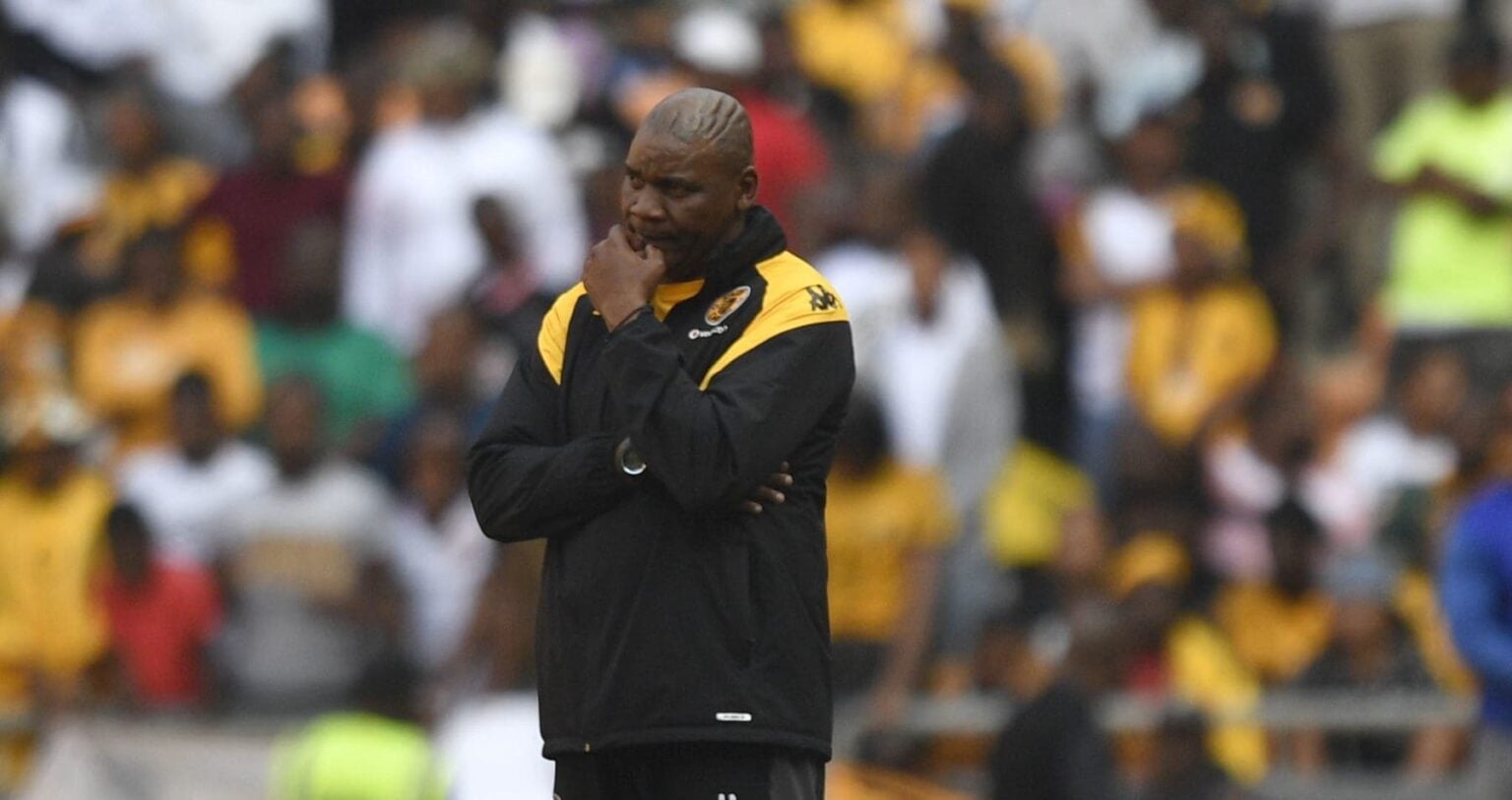
Ntseki’s body language suggested his disappointment with his team’s performance. He looked disoriented and defeated and seemed to struggle to come to terms with the loss.
His frustration is understandable. In the last two months, Chiefs have lost four of their seven matches and are still looking for their best form. They only won one – the 2-1 against Sekhukhune United – and drew twice.

Amakhosi, eager to get some silverware after an eight-year drought, have been booted out of two cup competitions. Challenging for the league title certainly is a far-fetched thought, as they trail perennial pacesetters Mamelodi Sundowns by 13 points after nine rounds of games. Of course, Sundowns, champions for the last six years, have a DStv Premiership game in hand.
As the former school teacher, Ntseki, who often speaks with so much clarity and profundity, addressed the media, his voice quivered.
It was a bit more telling when he was asked about his future at the club. Usually, he would cut a confident figure, stating that he has the backing of the club’s management. But on Saturday night, it all sounded different as he reiterated how much the situation, particularly with fans, was unsettling. He touched on how it also affected the players, lamenting the lack of patience among the fanbase.
NOT ENTERTAINING THE QUESTION ABOUT HIS FUTURE
“I think it’s a question that [doesn’t have] to be answered now because I’m employed by the club,” he said.
“We have technical conversations. We look into incidents like these and have meetings to discuss the possibilities going forward. But for you to ask how I see my future at Kaizer Chiefs, I don’t think this is the platform to entertain that question.”
One thing is sure, though: Ntseki needs to turn things around quickly if he wants to keep his job. Chiefs are under much pressure to win trophies, and he is running out of time.
His body language suggests that he is a very passionate coach. He cares deeply about Amakhosi and is equally frustrated with the state of affairs.
His reluctance to speak about his future suggests that he is still pondering and awaiting technical meetings. Nonetheless, Ntseki may need to take some time to reflect on finding a way to get the team scoring goals.
RELATED STORY: Dejected Ntseki pours his heart out after Chiefs fans threw missiles at him