

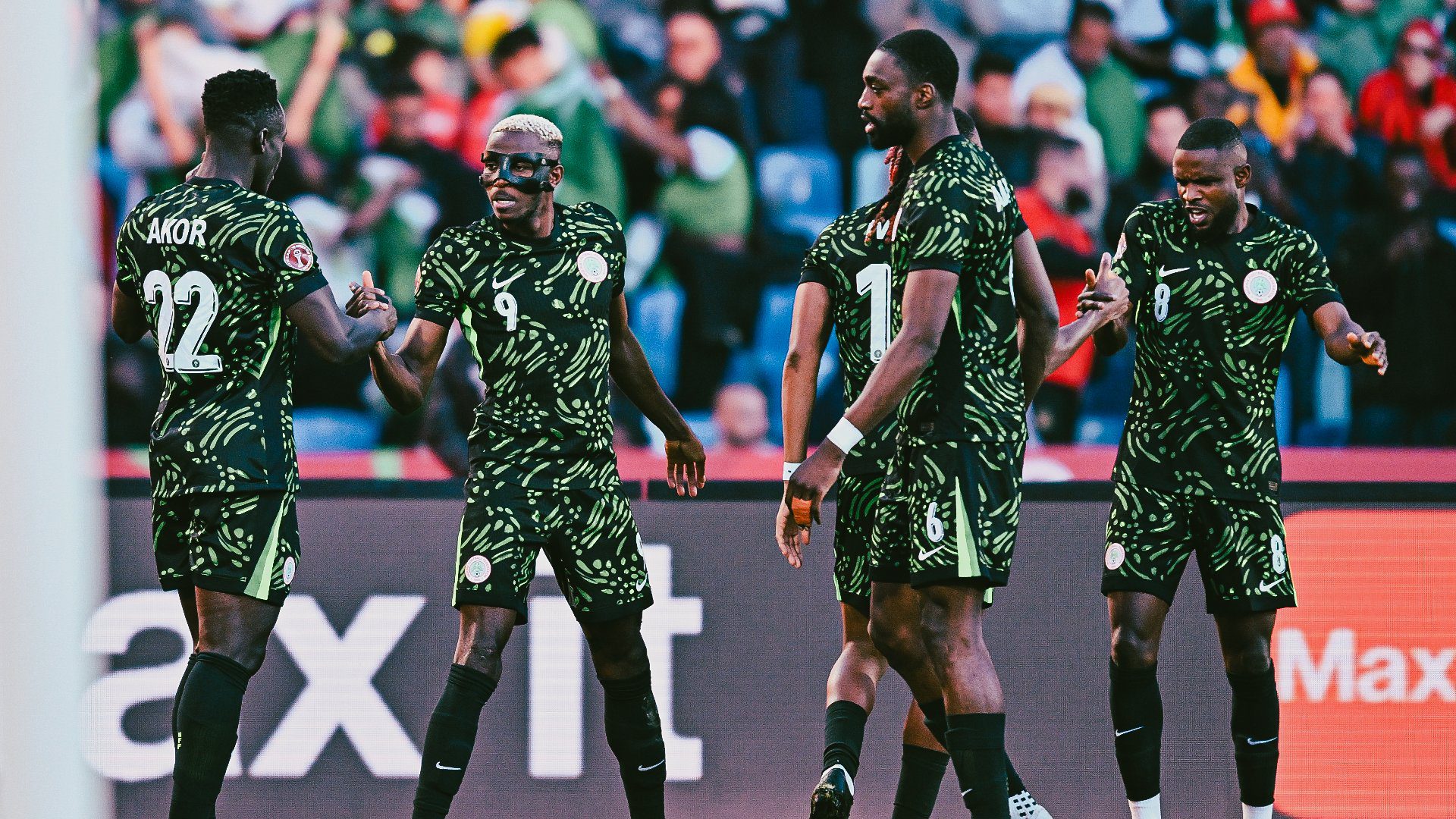
The ‘Super Eagles’ of Nigeria displayed a shrewd tactical masterclass as they eliminated Algeria 2-0 in the CAF 2025 Africa Cup of Nations [AFCON] quarter-finals. The massive result set up a scintillating semi-final encounter with the hosts, Morocco.
From the onset, Nigeria started the encounter on the front wave and totally dictated play from the attacking third, although they had to endure a flurry of attacks from Algeria towards the end of the tie.
This was a statement victory for the Nigerians against one of the competition’s heavyweights and a country en route to the 2026 FIFA World Cup, to be hosted by the USA, Mexico and Canada. However, in this piece, the writer will highlight the four key areas observed that contributed to the Nigerians’ tactical masterclass.
RELIABLE TACTICAL PRESSING BY VICTOR OSIMHEN
Few teams [Morocco] in this tournament have applied pressing schemes in various shapes within their technical-tactical organisations. Pressing is a tactical-physical ploy used by teams to deny the opposition space to operate and control possession during their offensive phase.
As observed, it’s applied systematically across the opposition’s defensive and midfield third areas depending on the time, space and build-up patterns as initiated by the opposition.
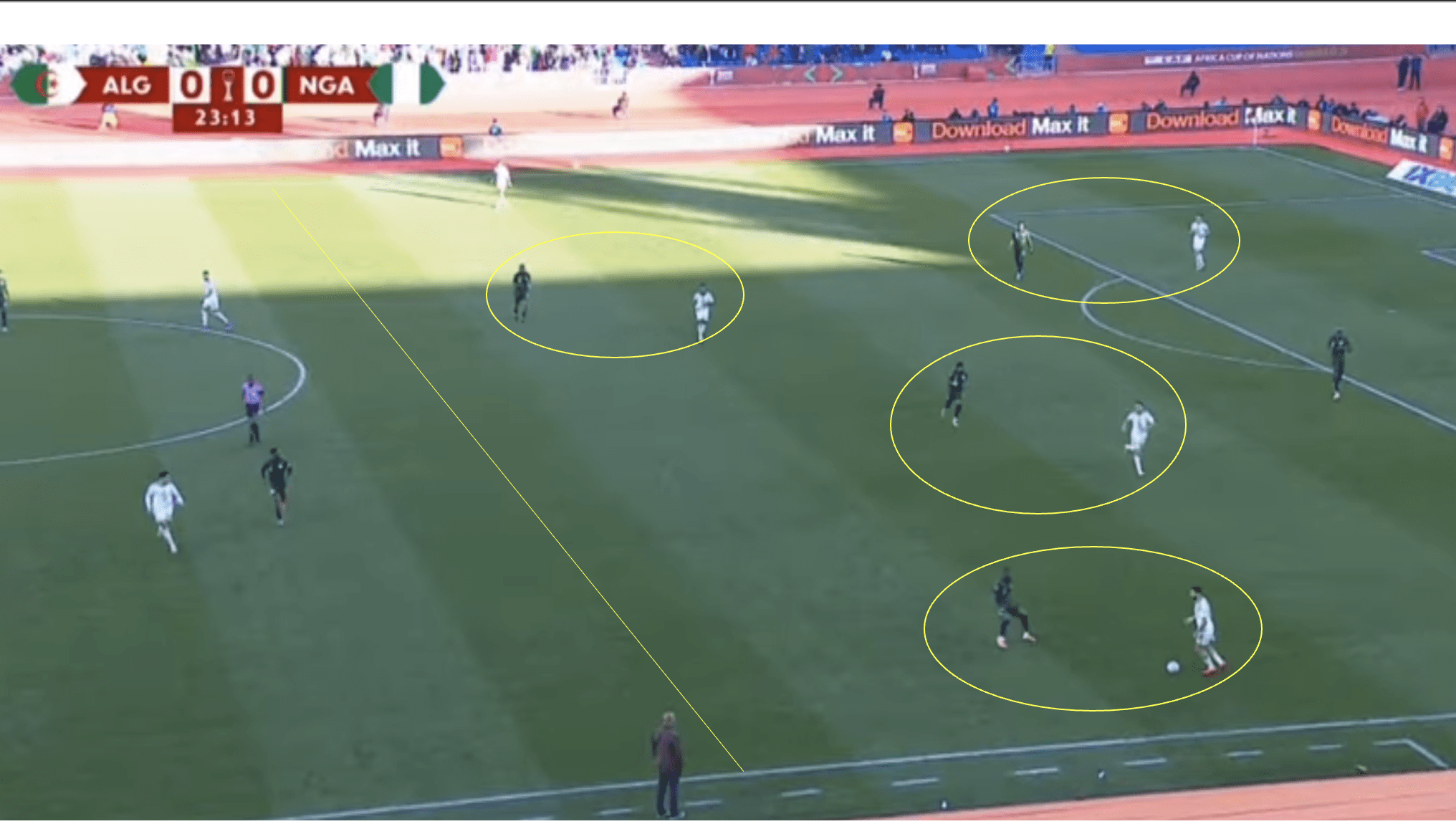
Against Algeria, Nigeria’s front three of Victor Osimhen, Ademola Lookman and Akor Adams, supported by the additional two midfielders Frank Onyeka and Alex Iwobi, went further in applying it in the Algerian build-up scheme and suffocated them successfully.
The majority of the time, it was intentional and well-prepared, putting pressure on the Algerian defence through 1v1s across the opponent’s defending zone [Fig 1]. This resulted in Algerian passes going astray, their organisation disrupted, and positional play completely destroyed.
Fig 1: Nigeria pressing triggers with 1v1 across the attacking third.
VARIATIONS IN THE OFFENSIVE PHASE BY ERIC CHELLE’S SIDE
Variations in tactical schemes have been few and unrecognisable in this championship. Teams have opted for safe, predictable tactics, often at the expense of many countries. Coaches have put in rigid tactical structures and only reacted after the opposition has scored or matches changed due to injuries and red cards.
But credit must be given to coach Eric Chelle and his technical brigade for encouraging a varied, mixed attacking approach in most Nigerian games. Within the Nigerian tactical strategy, both fullbacks Bright Osayi-Samuel and Bruno Onyemaechi encroach profusely in the attacking third, with leftback [Onyemaechi] supplying a cross for Osimhen to score the opening goal.
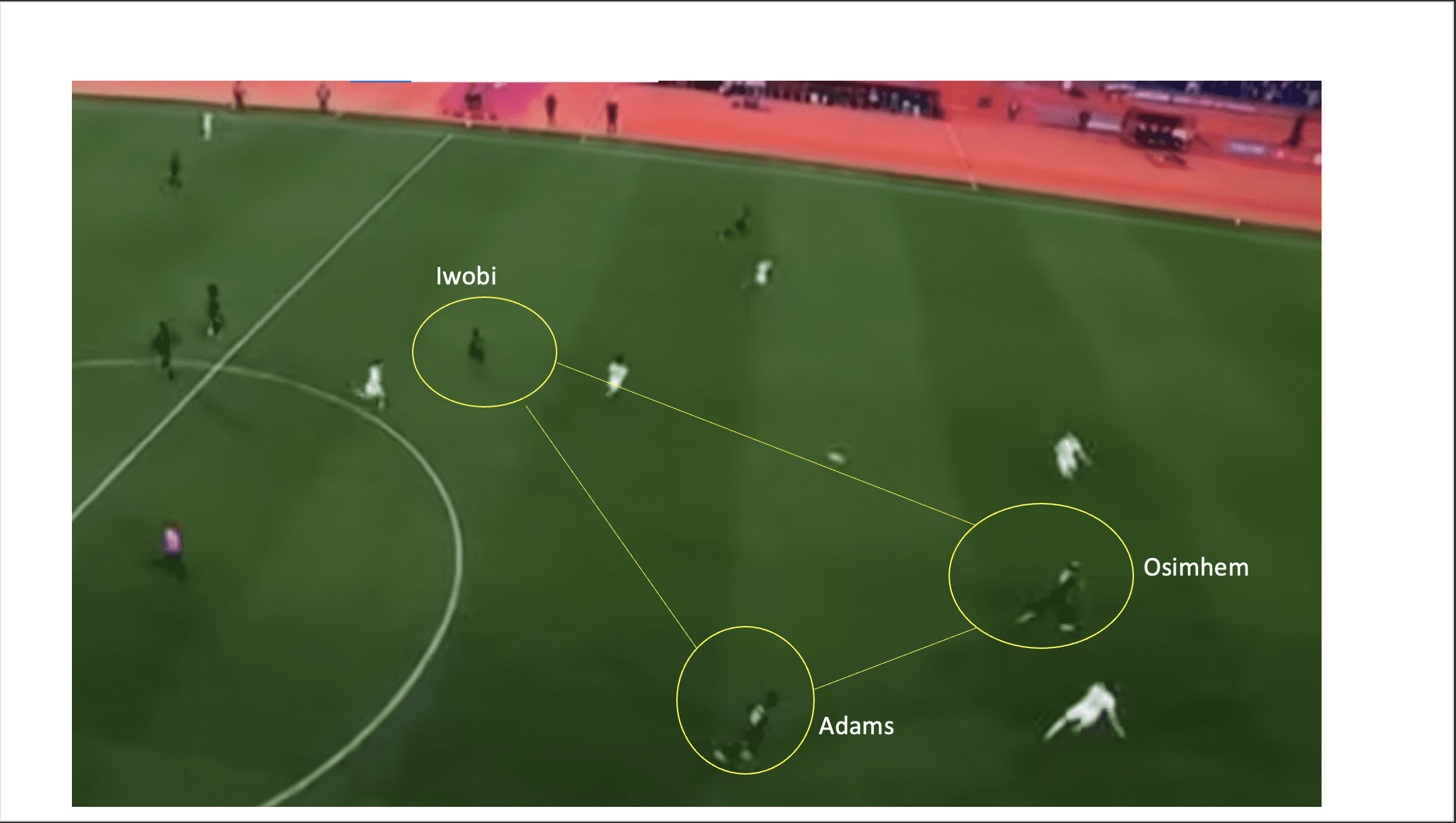
The second goal was scored through the middle corridor [Fig 2] from a rapid transition from defence to attack, where Iwobi, Osimhen and Adams all combined in a 3-pass metric attack to seal the match.
Fig 2: Transition and central attacking variation to finish.
Group success over personalities
The Nigerian team is littered with superstars. The Nigerian team is rich in personalities. The Nigerian team is blessed with millionaires.
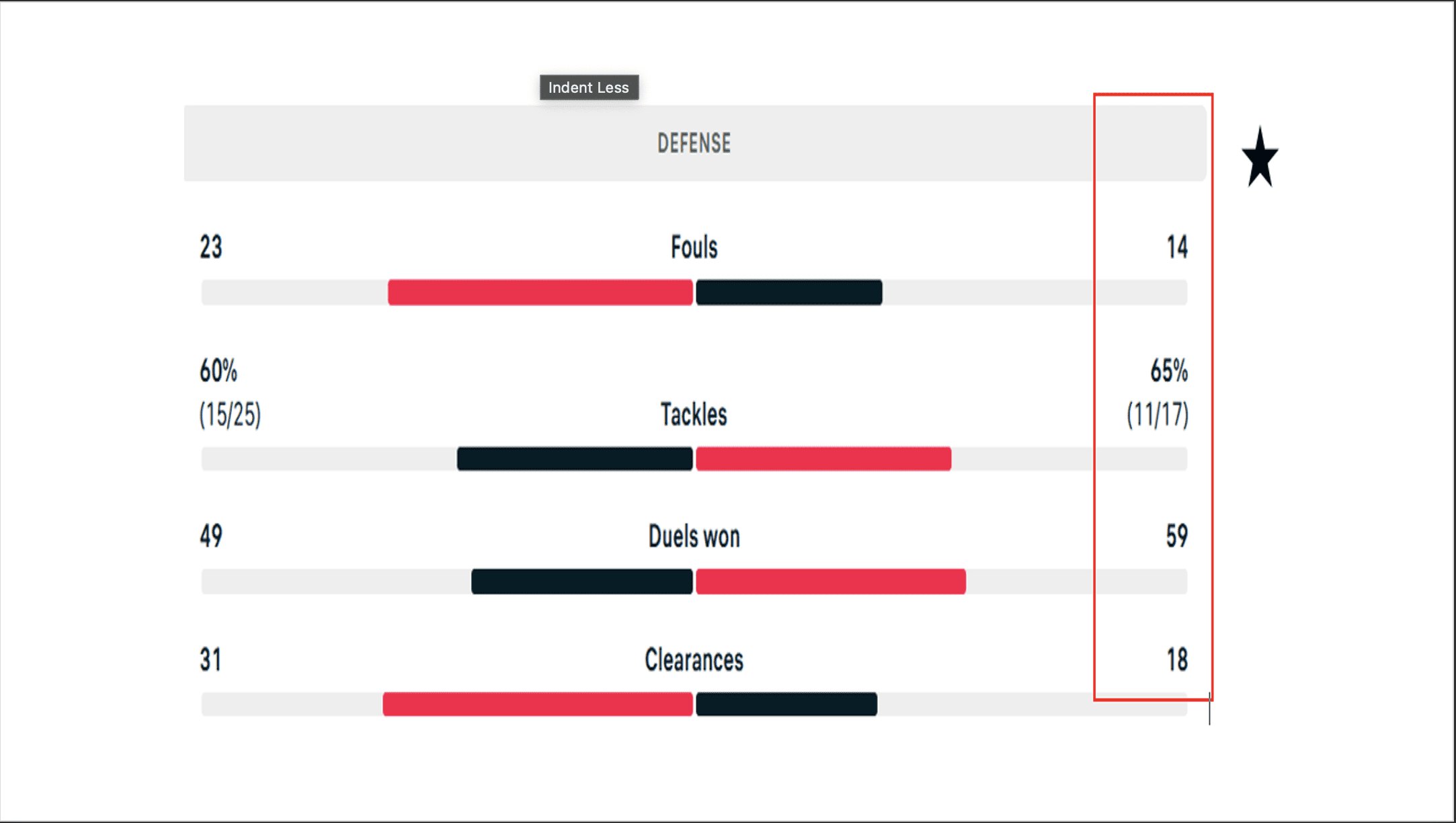
But besides all of these [talent, personalities, and riches], the players still run, fight, and show resilience. The team’s big players, from Osimhen, Lookman, and Iwobi, continuously covered acres of space in the 3-4 defensive zones, especially in the second half. This interesting occurrence illustrates the superior team social cohesion, psychological stability and advanced family coherence essential to team success at an elite high-performance level. This is well supported by the overall defensive statistics over the entire 90 minutes [Fig 3].
SUPER EAGLES’ MIDFIELD DYNAMISM
To succeed in this spectacle, teams have to dictate play with or without possession. Furthermore, midfield control in possession, out of possession and between transitions is ultra-important. Thus, the Super Eagles have perfected their midfield tactical structure.
Firstly, Wilfred Ndidi controls the timing of the ball’s entry into the midfield zone and maintains the positional structure during ball progression. Secondly, Iwobi directs the tempo, timing, delivery, and progression of the ball, either to the central channel, between the lines, or into the lateral spaces.
Thirdly, Lookman dips frequently into the half spaces and understands when to combine, go solo, and release teammates in the final third. The superior midfield adaptation has allowed the Nigerian midfield to continuously morph and provide the necessary dynamism to launch attacks and control the central zones.
In conclusion, the team has progressed through the tournament by scoring goals and playing with a lot of heart. Having kept two clean sheets in the competition, if they keep their temper in check, expect them to maintain this marauding march to their epic match against the hosts [Morocco].
RELATED STORY: Nwabali reveals why Nigeria has been flawless at AFCON so far