


So convinced was Benjani Mwaruwari that he had not done well in his Ordinary Level school exams that he did not even collect his results when they eventually came out.
In Zimbabwe, O-Level results – the equivalent of Matric – are an important rite of passage, a bridge every student needs to cross before moving on to A-Level, the last rung on the academic ladder before tertiary education. In a country that prides itself on a vaunted education system, O-Level results are awaited with bated breath by both students and parents alike.
This was not so for Mwaruwari. He never collected his results. In fact, to this day, he still has no clue how he did in those exams.
“After school, I went to Lulu Rovers in Division One in Chegutu. It was my teacher from Magwegwe Secondary School who recommended me. We went for trials in Form Three, and they liked us; it was two of us. They said we should come after school. After finishing school, while waiting for my results, I knew I had failed. So, I didn’t want to bother the old man and decided to go back to Chegutu. They welcomed me with warm hands.
“They eventually signed me, so I never even went back to collect my O-Level results. I don’t even know how I performed,” Mwaruwari tells FARPost at a Sandton hotel.
Before that move, his career had already had an unlikely start. For a man who made banging in goals his bread and butter during his career, one might think he started perfecting his sharp-shooting skills at a very tender age. However, when it all began for Mwaruwari, he was a goalkeeper.
STARTING OUT AS A GOALKEEPER AT YOUNG BLOOD
“I started my career at a club called Young Blood in Bulawayo at 10. I then played for Highlanders’ juniors between the ages of 11 and 13. As a young boy, I was a goalkeeper; even at primary school, I played in goal.” “One day, our striker got injured, and I went up front to play as a striker,” he says.
When he left his home as a teenager without even a glance back, he had already shown that he believed his future lay nowhere but on the football field. There would be no pretence otherwise. Over the next few years, he would show a single-minded determination to succeed in football that was rare in one so young.

“I used to carry balls and make sure the water bottles were full. As a younger one I was learning from the older guys by doing that. I spent two years in Chegutu and played close to 70 competitive games, which were good for my development. I then went to Harare and played in Division One for Air Zimbabwe Jets for one year. The reason I moved was that I didn’t want to be too comfortable,” he adds.
Throughout his career, Mwaruwari made a habit of being the man who always seemed to be at the right place at the right time. As soon as opponents had been lulled into a false sense of security, he seemed to ghost in from nowhere and put them mercilessly to the sword. He benefited from being at the right place at the right time, even off the field. How else can one explain his selection for the national team in 1999, before he had even kicked a ball in Zimbabwe’s top flight?
‘BENJANI WHO’?
“Sometimes in football, you need a bit of luck, and some don’t have it; I played with great players, but some didn’t make it to the PSL in Zimbabwe.
One day, we were at a trial at UZ with Lovemore Mapuya, and it so happened that Clemens Westerhof came to watch us playing a friendly.
“After the game, he came to the dressing room with a list; he told us that he was the national team’s new coach and wanted certain players. He picked six of us, and I was part of that list. But these people hadn’t signed me, and the national team coach had selected me, which gave them pressure to sign me, as my name was in the newspapers, which also alerted my former team. The call-up just came while I was relaxing; I didn’t see myself playing for the national team at that time,” recalls the Bulawayo-born former striker.
At what seemed like the snap of Westerhof’s fingers, Mwaruwari was now a Zimbabwe national team player. As one who had never kicked a ball in Zimbabwe’s PSL, let alone represented one of the traditional big teams, the refrain “Benjani who?” was expected when he donned the green and gold of his country of birth. It would not be long after his national team debut that he caught the eye of Jomo Sono, who immediately wanted to take him off UZ’s hands.
“Without even playing a competitive game, Westerhof called us to play against Malawi the following weekend. We were recalled to play against South Africa, and Jomo Sono saw me. Jomo was impressed and signed me from UZ,” he says.
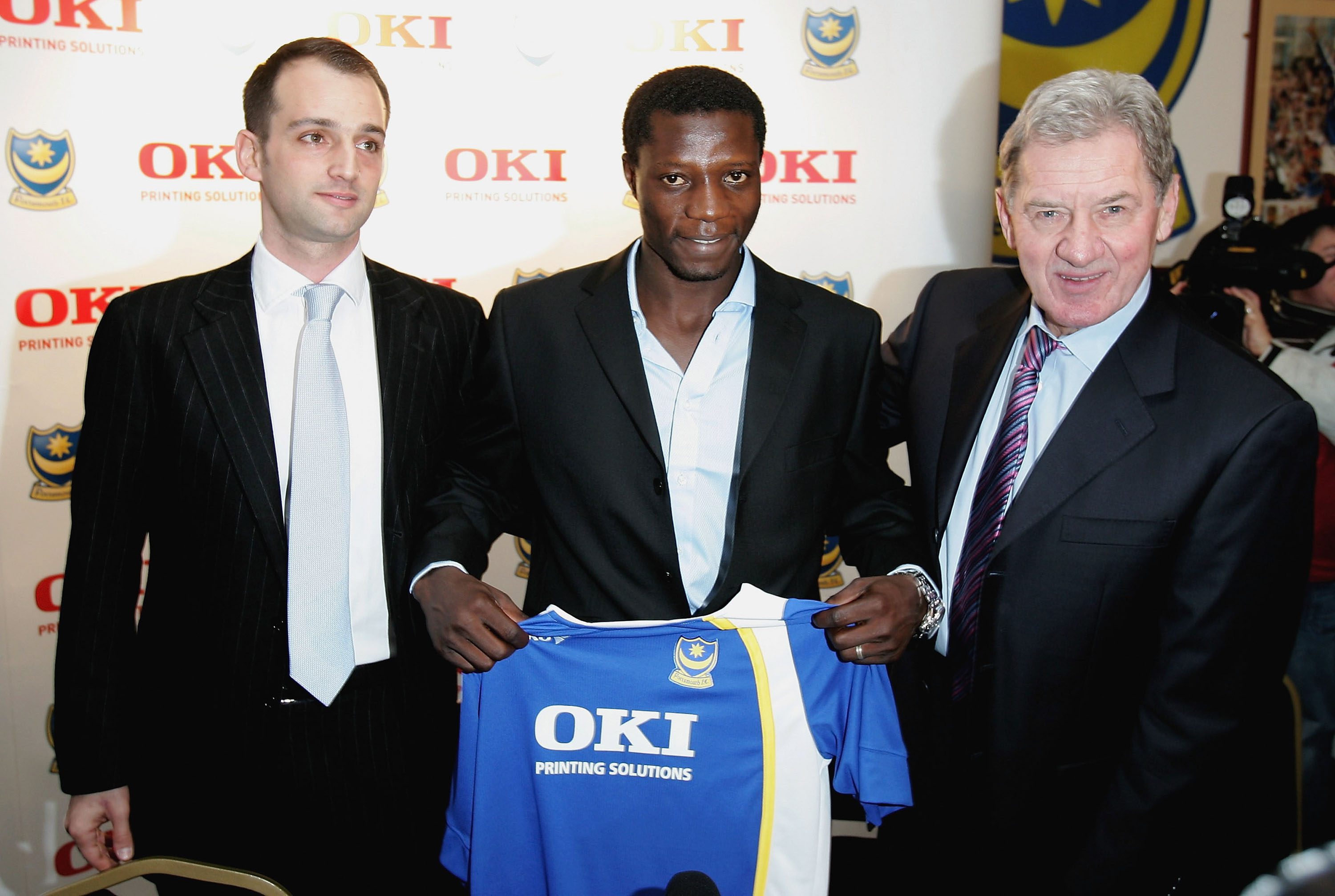
NO IDEA WHO JOMO SONO WAS
Interestingly, he had no idea who Sono was. Someone had to make him aware he was in the company of a bona fide football legend who could easily change his life.
“Jomo approached me, and at the time, I didn’t know him; he told me he had a team, so we went to the UZ directors; he had already phoned them prior. We concluded the deal, and then I was a Cosmos player.
“I didn’t anticipate the move to South Africa; all this came in the space of a month. I received the national team call-up while at trials at UZ, without playing in Zimbabwe’s Premier League. And I think that helped me because when you join a new team, you think about impressing, performing well, and mastering your game, but at that time, I didn’t have time to think about all of that. It helped me to gel in without any pressure,” Mwaruwari says.
At Cosmos, he had the opportunity to develop under a coach who, over the years, has earned a reputation for refining budding talent. He blossomed under Sono’s watchful eye, becoming one of the PSL’s deadlier finishers. His time at Cosmos served another purpose, too. With Sono’s vast network of contacts in Europe, a move to that part of the world was now just one successful trial away. Soon, the then-budding Zimbabwe international would become a jet setter, spending much time in airports worldwide as he sought a move abroad.
‘THEY TOOK SIBUSISO ZUMA’
“I played for about two years at Cosmos, and I did well, and Jomo was connected in Europe. Sometimes people think going to Europe is easy; I went to four different countries before I made it to Switzerland because Jomo was doing his thing quietly, out of the media’s eye.
“My first trial was in China, and then I passed through Norway and Belgium on my way back. And in the same month, I had to go to Zimbabwe as it was the international break ….”
He recalls a trial at Bournemouth before a deal was sealed with Turkish side Antalyaspor. “But I had a problem with my partner at the time.
“We started fighting, and I wanted to go home and deal with it. I lied and said I didn’t like the place because I wanted to return and iron out things with my partner,” Mwaruwari reveals.
After several trial attempts, it was the fifth time lucky for him after being snapped up by Zurich-based side Grasshoppers.
Sibusiso Zuma corroborates a story Mwaruwari often shares.
“Benjani always tells this story; I never knew. Around the same time [when Benjani was attending trials overseas], FC Copenhagen [Denmark] came through. They were in South Africa to play against Orlando Pirates, so he says Jomo had organised a trial for him.” “So, Copenhagen played Orlando Pirates and then Jomo Cosmos. I then impressed them, so instead of taking him, they took Zuma.
“Benjy joked around, saying I took his job. That’s my boy, we come a long way,” Zuma tells FARPost.
‘I USED TO EARN R9000 AT COSMOS’
Mwaruwari knows the former Bafana Bafana star was in the form of his life.
“Zuma was in top form at the time, and they signed him. I had a bad game against them, so they wouldn’t sign me.
“So, I ended up going to Switzerland to trial for the fifth time. I enjoyed travelling, collecting jerseys, tracksuits and getting soccer boots,” adds Mwaruwari.
His breakthrough came after one training session. He vividly recalls that it was a small-sided game.
“I still remember that training session, my first touch was good, I was so sharp, and the coach called me and said they are taking me – signing me in the first session. I used to earn R9000 at Cosmos, and now I was going to earn ten times that. My signing-on fee was €10000,” recalls the father of four.
At FC Zurich, ‘the Undertaker’ found a side jam-packed with talent, and perhaps for the first time in his professional career, he had to get used to life on the bench. He was now in Europe, competing for a starting berth with some of the most highly-rated talents from around the globe.
“They had good players, so breaking into the team was difficult because they were an excellent team with good strikers. I remember two strikers from Uruguay; it was difficult. Richard Núñez, that boy was so good; he scored week in, week out. I didn’t have pressure; they were playing well, so I was okay on the bench. The coach would occasionally play me as a sub, I only started a few games, three to four, but my time there was helpful.”
POSSIBLE MOVE TO KAIZER CHIEFS
“I was comfortable on the bench as I was new in the team; I still had to learn the culture. The coach who signed me was fired, and an excellent Brazilian striker was signed. It worsened the situation.”
With one year left on his contract, the new coach decided he wasn’t in his plans. “I thought I was rich because I had been keeping my money under my mattress,” he remembers.
Now clueless and somewhat lost in Europe, his yearning for home grew stronger. He thought he had made a fortune while turning out for the Swiss side, and there was also the added lure of a possible move to Kaizer Chiefs.
“An agent in Switzerland [Erwin Zogg] asked me to stay there while we looked for a club. We flew to France to try out at Auxerre.
“The coach at Auxerre [Guy Roux] said they had many strikers; he thought I was a good player, but he didn’t have space for me. I started fighting with my agent as I wanted to go back home. I reluctantly stayed for a week as he continued to look for a team for me, but I lost patience and left the hotel.
“As I checked out, workers at the hotel called my agent to ask when he would settle the bill, as I had already left.
“I had booked a flight, and so I headed to the airport. As I was about to go to the boarding gate with my bags checked in, he came in and called my name. I turned, and he begged me to go and talk to him. I initially refused, but he then asked me to at least come and say goodbye,” he says.
RELATED STORY: Part 2: Benjani Mwaruwari’s whirlwind journey to European football