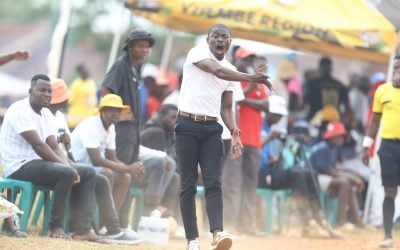

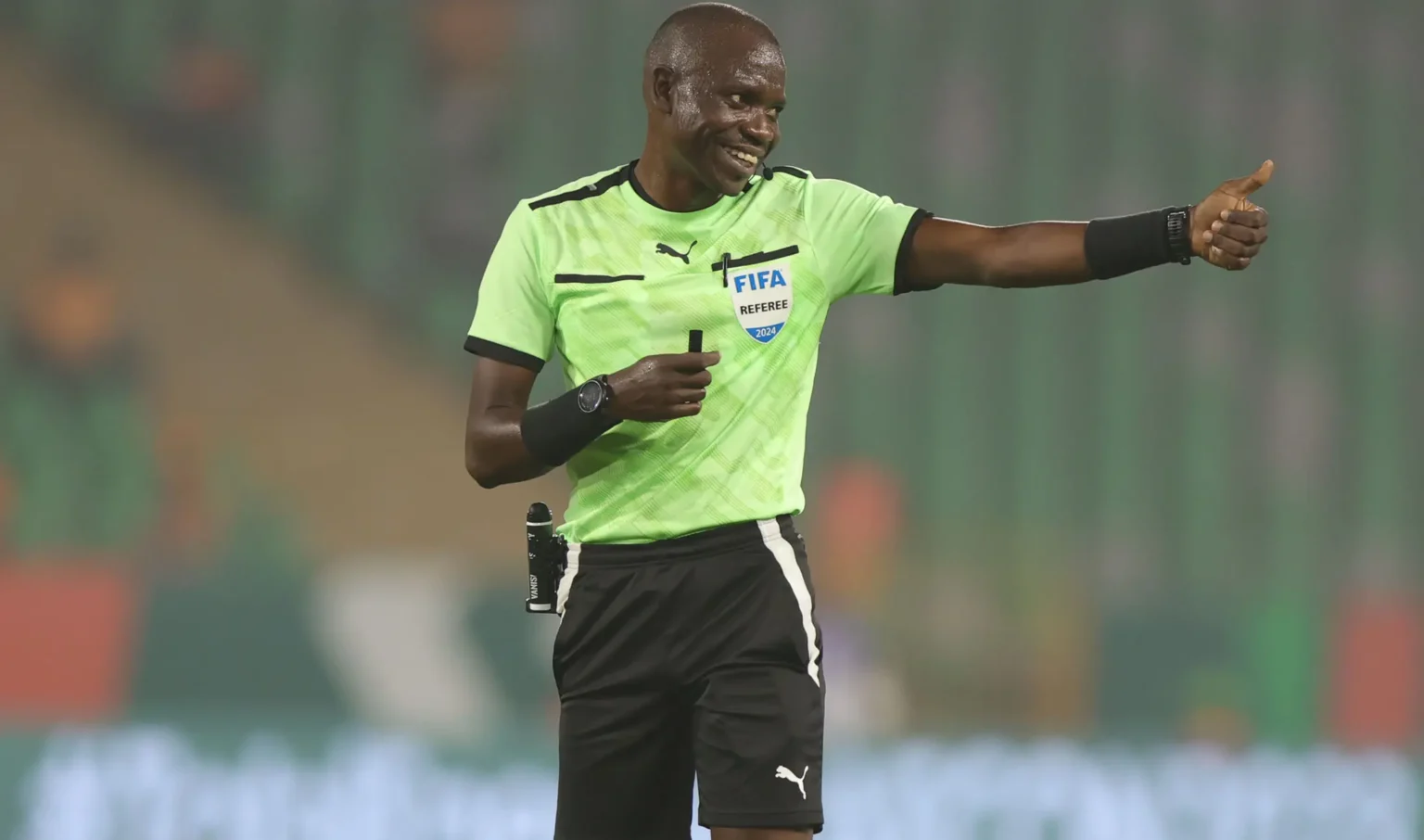
Hayi! That was my reaction when I learnt that Congolese referee Jean-Jacques Ndala Ngambo will officiate the CAF Champions League final between Mamelodi Sundowns and AS FAR Rabat in Pretoria. It took me a while to process and ponder what the reasoning could be.
And yes, I still couldn’t make sense out of the whole thing. It’s an absolute shame!
Jean Ndala – a man who, fairly or unfairly, has become a lightning rod since the chaos surrounding the AFCON 2026 final. That match at the Prince Moulay Abdallah Stadium in Rabat, Morocco, didn’t just end in controversy. It sparked an embarrassing legal battle now before the Court of Arbitration for Sport.
The AFCON refereeing saga may have slipped from the headlines, but it hasn’t slipped from memory. In any credible football institution, that alone should trigger caution, not punishment, but caution.
My ‘hayi’ was to say this isn’t just a bad decision but a credibility crisis dressed up as an administrative routine. I’m not sure whether this is CAF’s way of choosing defiance. Granted, let’s say CAF feels that appointing the under-fire Congolese ref is backing him. But how much of this decision gambles with the integrity of Africa’s premier club competition? It’s not even a question of competence; it’s about understanding optics, timing and responsibility.
Clearly, CAF understands none of the above.
We’re all human. Ndala will trot onto the Loftus Versveld Stadium pitch as a judged man. Just a single error and the floodgates will open. Social media, as always, will go crazy.
AND WHAT IS OLIVIER SAFARI TRYING TO DO?
Surely, there are countless referees across a continent of 54 nations, some of whom are set to officiate at the 2026 FIFA World Cup – the world’s biggest sporting event. Yet CAF is hell-bent on bringing back the same names, even when those names are at the centre of unresolved controversy.
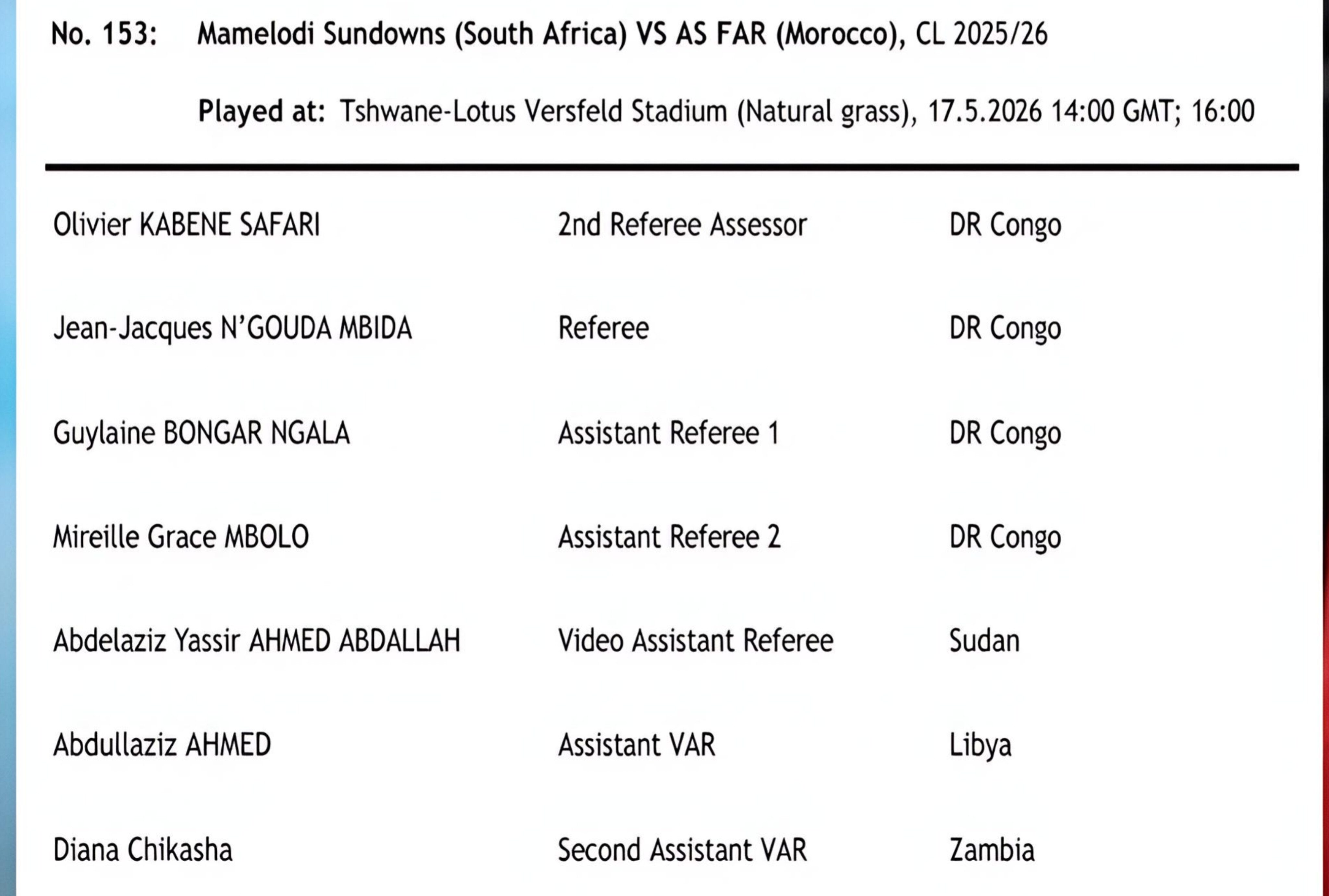
For an African football journalist like me who knows Olivier Safari Kabene, there are more uncomfortable questions to consider. What is a referee’s committee chairman doing appointing himself as a match assessor in a final? If something goes wrong, who will be held accountable? Will he hold himself accountable? If this is not poor governance, then it’s a clear conflict of interest.
For anyone watching from a distance, this says there is strong political backing for the two within CAF structures. Otherwise, how do we explain the absence of accountability following one of the most disputed finals in recent memory? Why has there been no visible disciplinary process? No cooling-off period? No attempt to restore public confidence? Instead, CAF doubles down.
AS FAR RABAT’S COMPLAINT
Interestingly, one of the finalists, AS FAR, has formally objected to Ndala’s appointment. A couple of voices of reason on CAF’s executive committee are reportedly pushing back. Yet the machinery rolls on, unmoved. That should concern anyone who cares about governance in African football.
This isn’t merely a refereeing problem; it’s fundamentally a leadership concern. It seems as though we’re reversing the significant progress CAF has achieved recently. The commercial growth, competitiveness, and global reputation are all being jeopardised by these questionable decisions.
What makes this all frustrating is that it can easily be avoided. Someone should educate the CAF leadership that good governance isn’t about always being right. Sometimes it’s about knowing when a situation requires sensitivity.
Surely CAF must know it has the responsibility to protect its referees and preserve the integrity of its flagship competition. African football deserves better than this. I’m not even talking about perfection, but professionalism. Not even defiance, but discernment.
Right now, CAF is offering neither.
RELATED STORY: Patrice Motsepe addresses autonomy of the CAF Appeals Board