
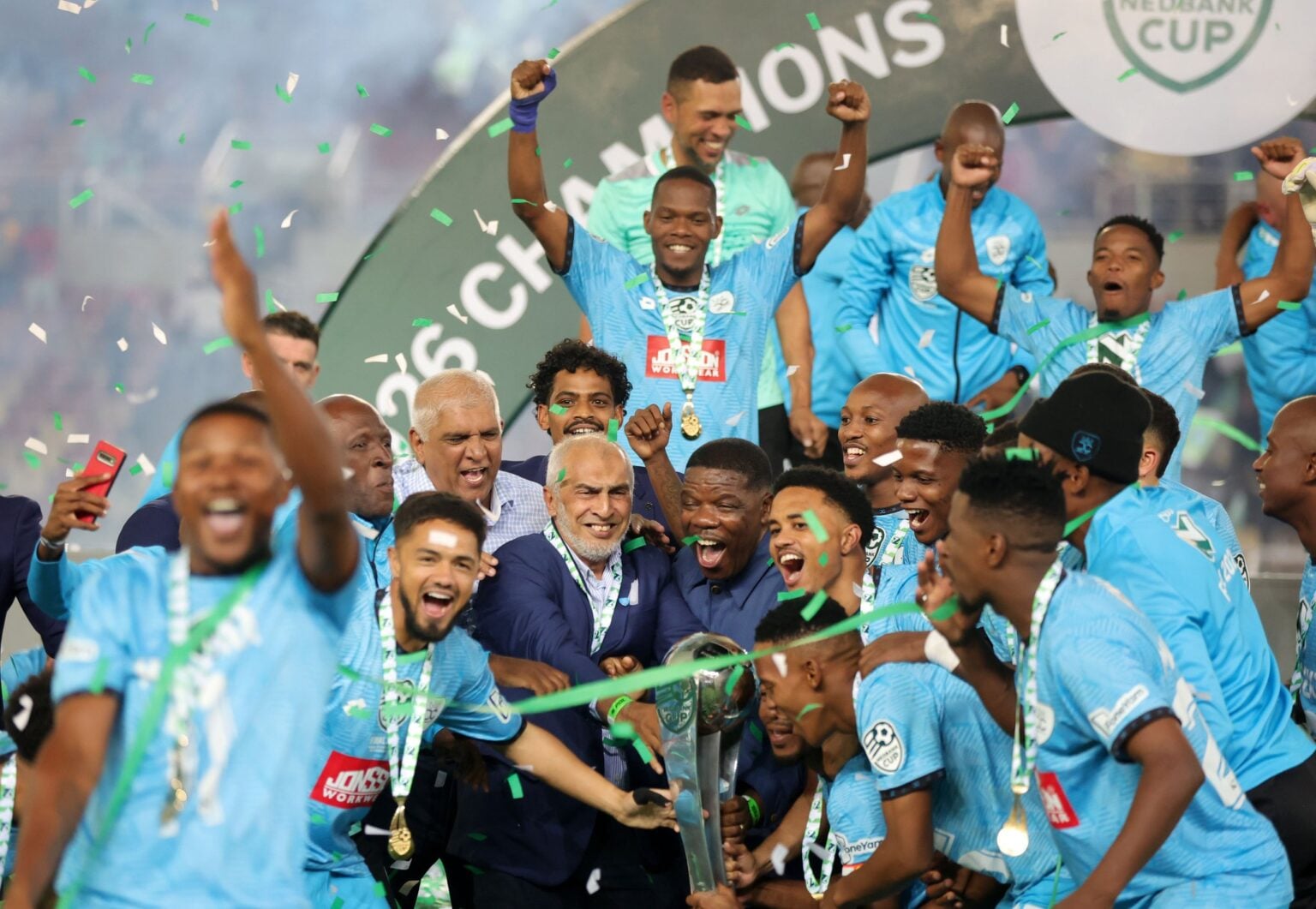
On a crisp Saturday evening, as confetti rained down and jubilant players lifted the Nedbank Cup high into the South African sky, Farook Kadodia stood at the edge of the celebrations, absorbing the moment with a quiet and reflective satisfaction.
For many, the 2-1 victory over TS Galaxy was defined by the 90 minutes of football they had just watched. It was a tactical triumph, a well-earned victory that came after a lean run of results in the league.
But for Kadodia, this was something far deeper. It was the culmination of a journey that began not in boardrooms or modern stadiums, but in the charged, uncertain atmosphere of apartheid South Africa, where football was as much a political act as it was a sport. The victory was also a love letter of sorts to KwaZulu-Natal, a province for which he has an undying devotion.
“This trophy belongs to KwaZulu-Natal,” he said on the sidelines of the celebrations. “I believe that, with all the rallying of support that we saw over the 20 years in Pietermaritzburg and the two years in Durban, supporters in KZN really deserve this.”
To understand Kadodia’s triumph is to understand a life shaped by conviction, risk, and an unwavering belief in football as a vehicle for social change. His story begins in Pietermaritzburg, where, as an 18-year-old matric student, he found himself drawn not just to football, but to the broader struggle unfolding across South Africa.
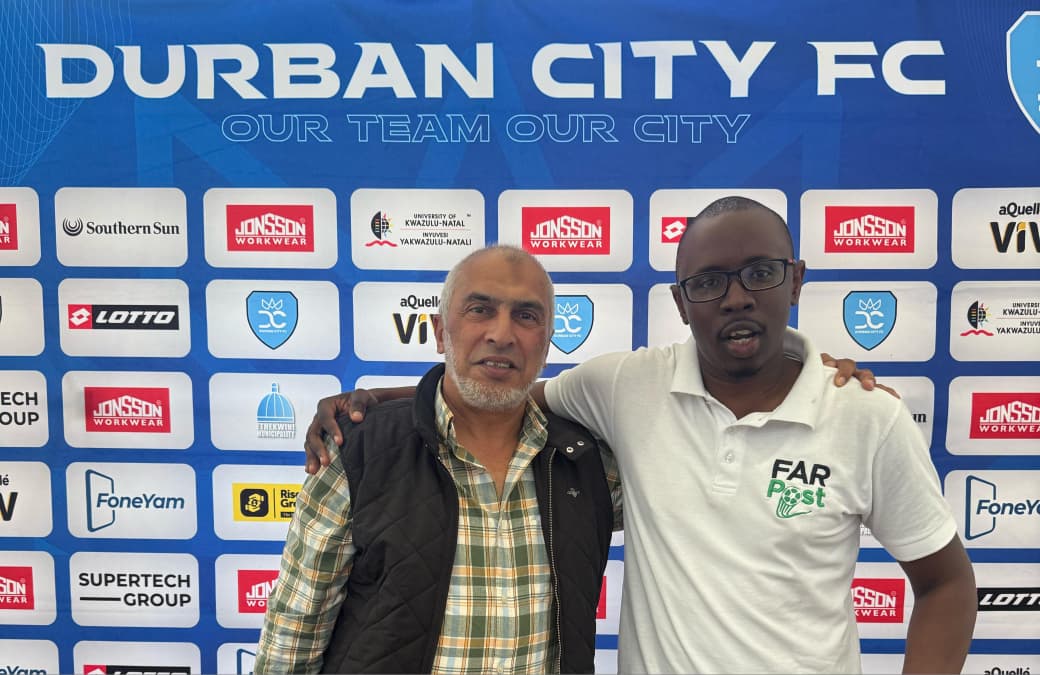
“I think it’s important to understand that it was a freedom struggle to which I needed to make a contribution,” he tells FARPost. At the time, he was a sympathiser of the United Democratic Front [UDF] and the Natal Indian Congress, movements deeply embedded in the anti-apartheid resistance.
ALIGNING HIMSELF WITH THE FEDERATION PROFESSIONAL LEAGUE
For Kadodia, the battleground was not the streets alone; it was also the football pitch. “We needed to make sure that we made a contribution to get non-racial sport in an abnormal society,” he says.
In apartheid South Africa, sport was rigidly segregated, mirroring the country’s broader system of racial division. Football, however, had begun to emerge as a site of resistance. Non-racial leagues, though underfunded and politically marginalised, represented an alternative vision – one where talent, not race, determined opportunity.
Kadodia gravitated toward this vision, aligning himself with the Federation Professional League, which championed non-racial football.
His entry into football administration was almost accidental, born out of a willingness to help rather than a calculated career move. At the time, a Greek businessman, Mitch Mendonides, had acquired a franchise linked to Pietermaritzburg. Based in Durban, Mendonides needed local support to build a fan base in the city. Kadodia stepped forward.
“I volunteered to give him support in Pietermaritzburg and to see exactly how we could get locally based people to rally behind the team,” he says.
Still in matric, Kadodia threw himself into the role, handling logistics, lobbying, and community mobilisation, responsibilities that would challenge even seasoned administrators.
While he had the exuberance and perhaps the foolhardy stubbornness of youth, what he received was a baptism of fire.
“I had just come out of matric,” he recalls. “I didn’t venture into further studies. And I said I’d start looking for business opportunities. My dad had a business, and I said, ‘Okay, let me see how I can assist there first.’ But then the football thing became so huge, meaning that you have a league that’s fighting a non-racial cause…”
At that time, teams in the non-racial league included Berea, Manning Rangers, and Cape Town Spurs.
SECURING FUNDS TO TRAVEL TO CAPE TOWN
Young Kadodia’s mission was to secure funding for the team to travel to Cape Town. “My biggest nightmare because the league approved my application, they wanted to see a team in Maritzburg. So I needed to secure funding to keep this team afloat. Those two trips to Cape Town were my first nightmare. I didn’t have a cent in my pocket. How was I going to do this?”
When Mendonides eventually liquidated the club due to financial difficulties, the young Kadodia found himself at a crossroads. Rather than walk away, he soldiered on.
Working alongside coach Billy McGillavary, Kadodia helped keep the team afloat, ensuring players were supported and fixtures fulfilled. It was during this period that football shifted from passion to responsibility.
“They approached me about applying to the league,” he says. “And that’s when the whole business of running football became something serious.”
Travel during that era was expensive, and sponsorship opportunities were limited, especially for leagues associated with anti-apartheid structures. Yet failure to fulfil fixtures could mean expulsion from the league.
Football, meanwhile, underwent its own transformation. The end of apartheid brought about the unification of leagues and the birth of a new professional era.
Yet, in Pietermaritzburg, something was missing.
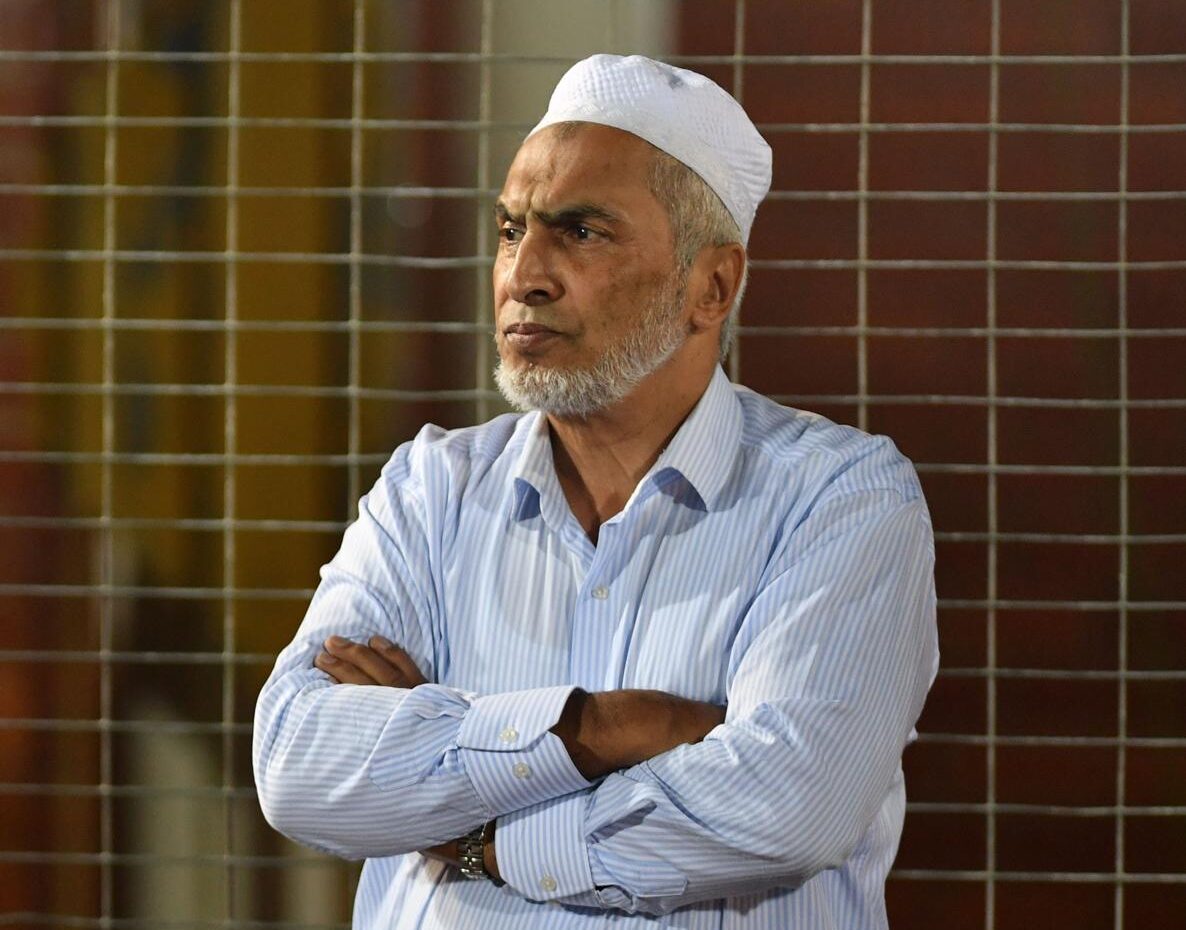
By 2003, local leaders recognised the need to revive the city’s football culture, particularly to make use of the Harry Gwala Stadium. They turned to Kadodia, but for the businessman, the decision to return was not easy.
“I was approached by politicians in Pietermaritzburg to revive the team,” he says. “After 20 years of building what I’ve built financially, do I go and use my finances?” he recalls thinking.
Ultimately, he said yes. “Our priority was to promote social cohesion and nation building…,” the 66-year-old administrator adds.
MARITZBURG UNITED’S ‘FRIDAY NIGHT LIGHTS’
The veteran administrator’s return marked the beginning of a new chapter, one that would define his legacy in South African football.
In 2005, with the support of a newly formed board, including his brother and other investors, they purchased the status of Tembisa Classics. It relaunched the club that would become Maritzburg United.
However, in the second season, the team was relegated. They eventually secured promotion to the Premiership in 2008.
What followed was a remarkable period of stability and growth. From 2008 until 2023, Maritzburg were continuously in the PSL. In a league known for its volatility, the Team of Choice became a model of resilience. The 2017/18 season was perhaps their best, with a first major top-flight cup final and a fourth-place finish in the league.
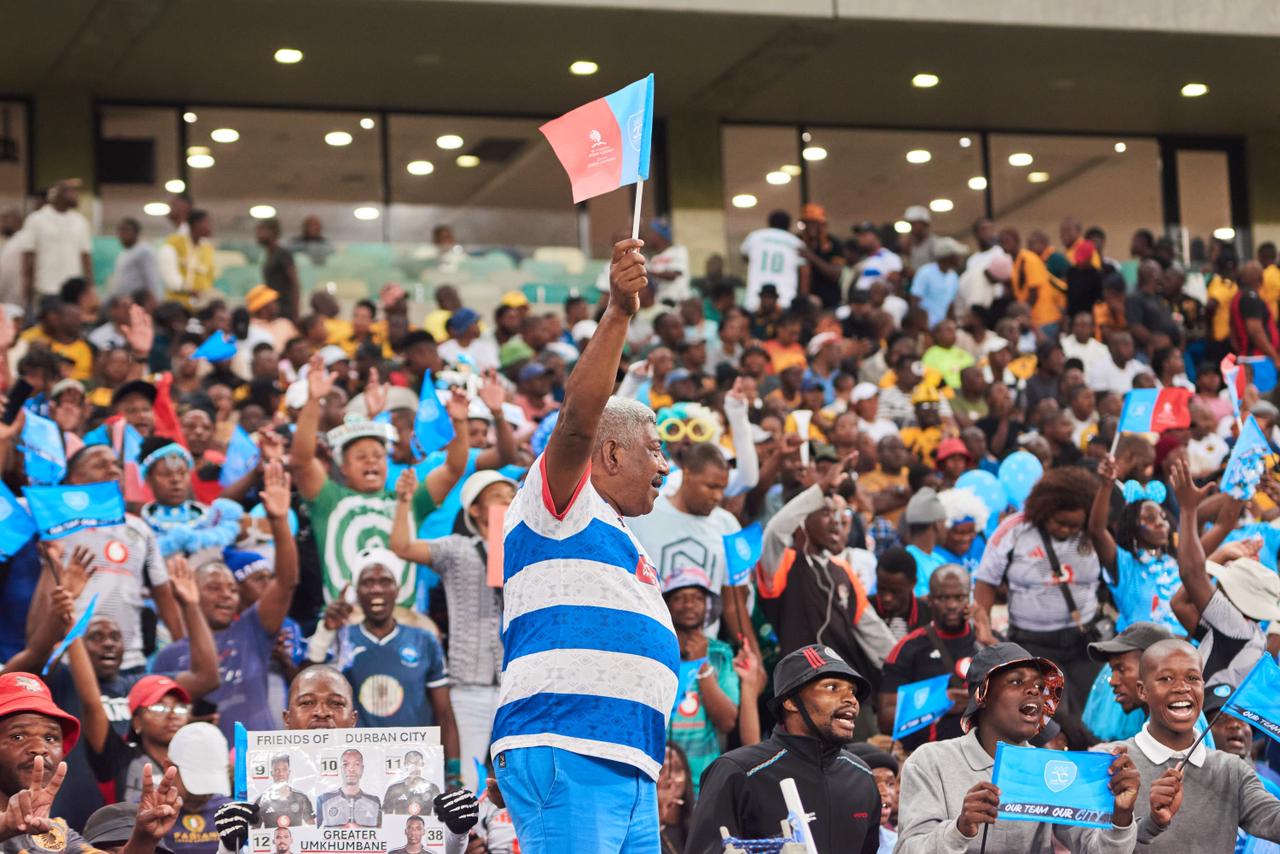
Central to this success was the concept of “Friday Night Lights”, a matchday experience that transformed football into a social event. The club’s matches became more than just games; they were communal gatherings, offering an alternative to the social challenges many young people faced.
“Instead of people going to drugs and other wrong vices, bring them to the grounds,” he explains. “Ask anybody who stays in Maritzburg: when there was a match on a Friday, what was their plan? It was the talk of the day, ‘we’re going to Harry Gwala’. That’s why we made a beautiful presentation for TV. I’m also sad that DStv, knowing very well that they came to us and told us our content was exemplary and that they wanted our Friday night lights because of the excellent content it produced for viewers, now sees us struggle to get fixtures on a Friday night. That’s very unfair. Durban City, through Maritzburg, had a history of promoting Friday night lights.”
‘IT WAS THE DARKEST DAY’: KADODIA
Success, however, is rarely linear. In May 2023, Maritzburg United faced relegation. Despite a capacity crowd of 12,000 supporters, the team failed to secure the result needed to stay in the PSL. “It was the darkest night,” Kadodia says.
For a club that had spent 15 years in the top-flight, the fall was devastating. Yet Kadodia chose to see it as a moment of reflection.
“That was a test,” he says. “A reset button.” But the challenges did not end there. In the aftermath of relegation, Maritzburg United found itself without a home ground. Political dynamics and competition from other clubs, particularly Royal AM, complicated access to facilities.
“We had no stadium,” the revered businessman says. “They didn’t want to share.” Forced to relocate, the team played its home games in Durban, a move that brought logistical and financial strain.
Despite these difficulties, the club narrowly missed promotion, falling short by a single point to make the cut for the playoffs.
“That season of 2023/24, we played our home games at Sugar Ray Xulu in Durban. It was a very trying situation, and I’m very confident that if we had Harry Gwala in that same year, we would have been promoted again, because the fans were strong enough. Nevertheless, in that season, we missed the playoffs by one point. It was quite difficult because you must understand: the longer you stay in the NFD, the costs are high, and the grant is very small,” he says.
For Kadodia, it had become clear that a more fundamental change was needed. His romance with Pietermaritzburg, which had started during the harshest days of apartheid, needed to be extinguished.
‘THE LONGER YOU STAY IN THE NFD…’
His solution, a relocation and rebranding of the club, was bold. “We then decided we needed to find a new home … Durban became our home. When you turn on the TV, you see Durban City. On its own, it has commercial value. It has brand value. And we wanted to revive the old Durban City,” he says.
Durban, with its rich football heritage and commercial potential, became the obvious choice. The club was renamed Durban City, a nod to the past and a statement of intent for the future. The move also coincided with structural changes within the club. New shareholders were introduced, including younger members who could bring fresh ideas.
Drawing from his time in Maritzburg, 2023 marked a turning point for the family as his son, Younus, was entrusted with steering the club’s push for promotion. He was subsequently appointed General Manager of Durban City, tasked with turning ambition into tangible success. “We needed young blood.”
It was a calculated blend of experience and innovation, a strategy that would soon bear fruit.
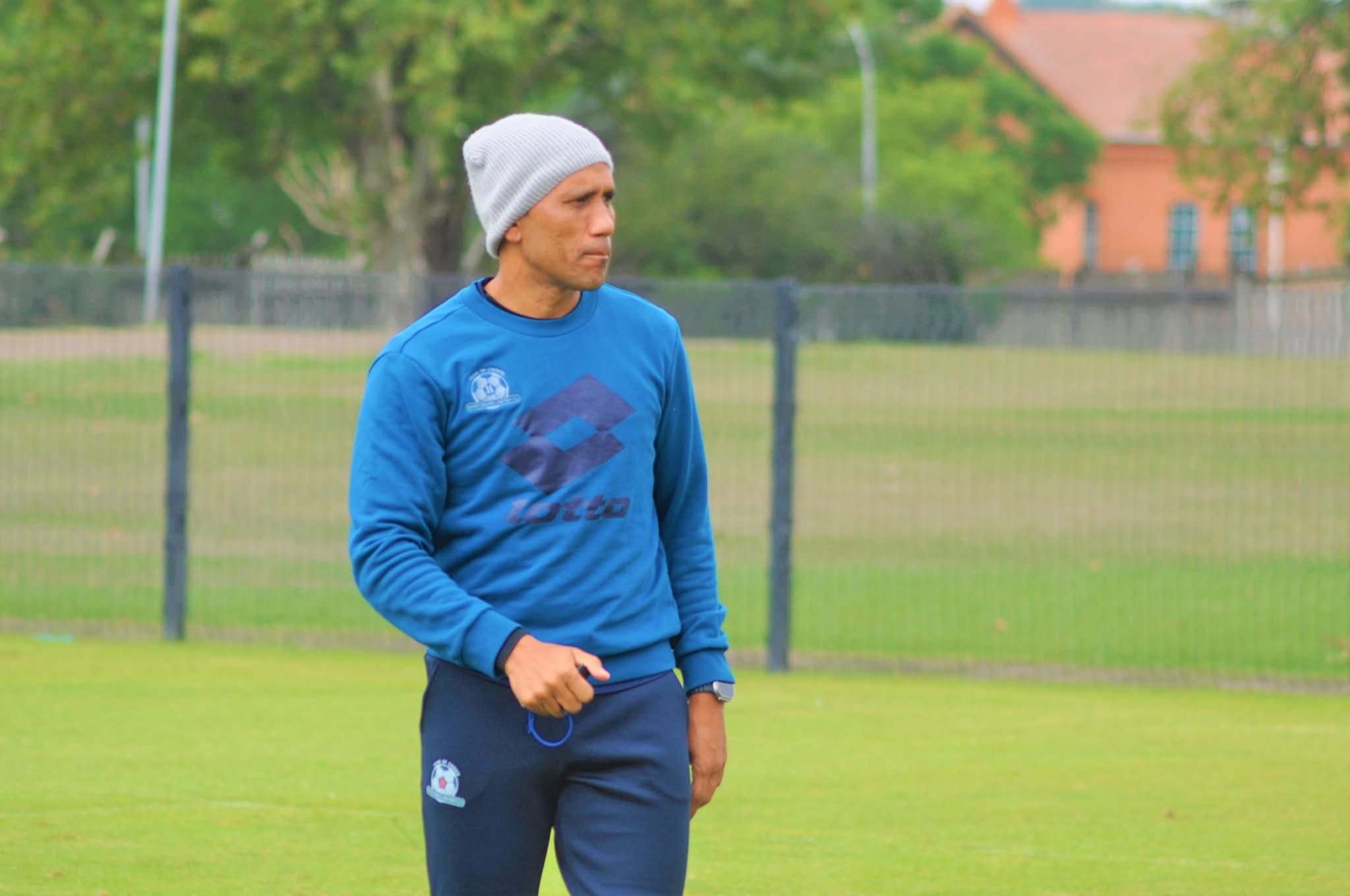
Fadlu Davids, who worked with him as a player and later as Maritzburg coach, describes him as ‘streetwise’. “He’s very much a leader who does not really interfere in the coaching part. He has his opinion, but allows you to make your decision,” Davids told FARPost. “But he’s very active in the off-the-field issues. You know, he’s always streetwise in terms of anticipating anything dirty being done against the club, anything underhanded being done against the club from external forces.”
Saturday’s Nedbank Cup victory represents the high point of this new era. For Durban City, it is a statement that the club has not only recovered from its setbacks but has emerged stronger.
For Kadodia, it is something more personal. It is validation. Validation of a philosophy rooted in inclusivity and perseverance. Validation of decades spent navigating the complexities of football administration. And validation of a belief that the game can still be a force for unity and progress.
RELATED STORY: Farook Kadodia: Nedbank Cup triumph could transform Durban City’s future