

South African football does not simply need a new SAFA president. It needs a man brave enough to dismantle the system that elected him, surrender some of his own power and risk losing friends to rescue the game.
When delegates elect the next SAFA president on Saturday, the temptation will be to reduce the contest to personalities. Who has the stronger campaign? Who controls the regions? Who has made the most convincing promises? Who can assemble enough votes to occupy the most powerful office in South African football?
But the identity of the winner will matter far less than what he is prepared to do once the celebrations are over.
The man who can save SAFA is not necessarily the loudest candidate or the one with the most impressive résumé. He is the one willing to make difficult decisions, even when those decisions threaten the structure that carried him into office. He must understand that replacing Danny Jordaan without changing how SAFA operates would be a hollow victory.
South African football does not need a new king. It needs a servant prepared to rebuild the kingdom.
The first sign of genuine change would be a president willing to surrender some of his own power. SAFA has become too closely associated with one office and, for many years, one individual. That is unhealthy for any organisation. The next president must strengthen the institution rather than build another personality cult. He must empower an independent, capable administration, allow the NEC to exercise proper oversight, and create systems that remain effective long after he has left office.
SAFA’S NEC CAN’T CONTINUE ACTING LIKE PRESIDENTIAL SUPPORTERS

The NEC cannot continue behaving like a collection of presidential supporters. Its members must question decisions, scrutinise finances and hold the administration accountable.
A president who surrounds himself only with loyalists will reproduce the same culture under a different name. The right man will appoint people who are qualified enough to challenge him.
The next president must restore trust by making financial transparency non-negotiable.
SAFA has faced questions about its finances, including reported delays in paying salaries and regional grants. Its strained relationship with corporate South Africa has also made it increasingly difficult to attract meaningful commercial support.
Sponsors do not invest only because Bafana Bafana are winning. They want to associate with an organisation that is credible, stable and professionally governed. The man who can save SAFA must be prepared to explain where the money comes from, how it is spent and who benefits from it.
He must introduce stronger financial controls, publish clear reports and ensure that every rand intended for football development reaches its destination.
Transparency cannot be a slogan used during an election campaign. It must become the normal way in which SAFA operates.
South African football spends enormous energy discussing Bafana Bafana while neglecting the base of the pyramid.
The 52 SAFA regions should be the heartbeat of the game. They should organise competitions, identify talent and create opportunities for young players, coaches, referees and administrators. Instead, some regions have reportedly received their stipends late or not at all, leaving them unable to fulfil their most basic responsibilities.
The next president must fund the regions properly, but funding alone will not be enough. There must also be accountability.
PROFESSIONALISE THE NATIONAL TEAM PIPELINE
Each region should have clear development targets, functioning competitions and transparent financial reporting. Regional leaders cannot demand money from SAFA House without showing what they are doing to develop football in their communities.
A child with talent in Giyani, Lusikisiki, Mahikeng or Upington should have a functioning pathway to identify and develop that ability. That is where the health of South African football should be measured. It would be dishonest to suggest that SAFA has achieved nothing during Jordaan’s tenure.

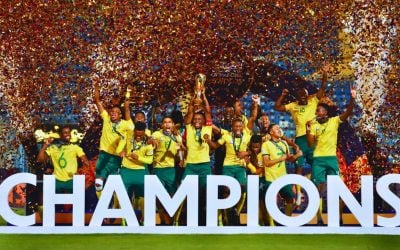
South Africa’s men’s Under-17, Under-20 and senior national teams qualified for their respective FIFA World Cups in the same cycle. Amajita and Bafana also progressed beyond the group stages.
Those achievements deserve recognition. But tournament qualification cannot be the only measure of a football association’s success. A talented generation, an exceptional coach or the development work done by professional clubs can sometimes disguise a fragile system.
The women’s Under-17 and Under-20 teams failed to reach their World Cups, while Banyana Banyana are forced to negotiate the difficult route of the intercontinental play-offs.
That inconsistency exposes the absence of a reliable production line. Junior national teams should not suddenly become active when qualifiers approach. Their coaches should not work under temporary arrangements, and players should not be assembled at the last minute and expected to perform miracles.
The next president must establish permanent technical structures across all national teams. There must be continuity between the junior sides and the senior teams, supported by proper scouting, data, coaching and regular international competition.
Success should come from planning, not occasional good fortune.
THE STRENGTH OF BAFANA BAFANA & BANYANA BANYANA
The ABC Motsepe League, Sasol League and Hollywoodbets Super League are not side projects. They form part of the foundation of South African football. They must be administered with the same urgency and professionalism demanded at senior national-team level.
Fixtures should be communicated on time. Clubs should receive the support they are owed. Players should compete on suitable fields, and women’s football should not be treated as an obligation that receives attention only when Banyana Banyana succeed.
The next SAFA president must understand that the strength of Bafana and Banyana begins in these competitions.
If the foundation continues to crumble, the success at the top will eventually disappear. This may be the most important requirement of all.
The man who can save SAFA must be willing to become unpopular. He will have to challenge regional leaders who helped elect him. He will have to question NEC members who expect positions or rewards. He may have to remove underperforming administrators, end comfortable arrangements and reject demands from people who believe their political support entitles them to a share of the organisation.
He must refuse to replace one patronage network with another. That will require courage because the system will resist any leader who tries to change it. The same people who celebrate his election may turn against him once reform threatens their interests. If he prioritises re-election over rebuilding football, he will fail.
WHAT REAL CHANGE AT SAFA WOULD LOOK LIKE
Real change would not be a new portrait hanging inside SAFA House. It would be regional grants paid on time, properly run grassroots competitions and junior national teams with permanent programmes. It would be employees receiving their salaries without uncertainty, sponsors returning because they trust the organisation and audited financial reports that do not require lengthy explanations.
It would be an NEC capable of holding the president accountable and a president secure enough to accept that scrutiny. Most importantly, it would be a SAFA that can function without depending on one powerful individual.
Jordaan’s historical contribution, particularly his role in bringing the 2010 FIFA World Cup to South Africa, will always form part of his legacy. But no previous achievement should place any leader beyond scrutiny or make renewal unnecessary.
After three terms, South African football needs a new direction. However, changing the president will not automatically change SAFA. The man who can save the association is the one prepared to reform the very system that gives him power. He must enter SAFA House knowing that his greatest achievement will not be winning the presidency. It will be building an organisation that no longer needs saving.
RELATED STORY: SAFA presidential aspirant Sandile Zungu addresses stance on FIFA boss Infantino