

On his wedding day, Ronald Himeehua Ketjijere started the morning with a jog. For most people, a wedding day is something to savour, a carefully choreographed occasion that one hopes will unfold perfectly, without a hitch. The morning, sometimes even the night before, is usually spent making sure every stitch on every garment is in place, every spoon and fork is on the right table, and every last detail is accounted for.
The thought of taking a jog along the village roads on a morning like that would hardly cross anyone’s mind. Ketjijere, however, is not like most people.
“It’s passion,” the man nicknamed ‘Stiga’ tells FARPost. “I love football with all my heart. Even on my wedding day, I went jogging, and my wife said, ‘This man is crazy.’”
Viewed in isolation, the incident might seem a harmless display of sporting obsession. But set against the backdrop of Ketjijere’s career and the many demands on his time, it offers a revealing glimpse of the man himself.
For starters, it speaks to a lifelong devotion to football, a love affair that has endured the competing demands of an increasingly busy life.
That ability to juggle competing responsibilities has enabled Ketjijere to navigate life as a professional footballer while pursuing a legal career, eventually becoming a practising lawyer and now, at 39, a partner at a law firm.
A LIFELONG CONNECTION TO AFRICAN STARS
His connection to African Stars FC dates back to childhood, when he first became interested in the game.
Football, it seems, runs in the family. His father also played for African Stars, though Ketjijere never had the chance to see him play. Instead, old photographs have offered glimpses of his father’s days on the pitch, wearing the same club colours his son would eventually represent.

His journey began in primary school, taking him through secondary school and village tournaments. After completing his matriculation, he moved to Windhoek to further his education.
He never followed the conventional progression through the junior national teams, instead leaping directly to the senior national side. His international career began around 2010 and included appearances at the 2019 Africa Cup of Nations finals in Egypt.
He would eventually captain the Brave Warriors, adding national leadership responsibilities to an already impressive football résumé.
His journey to becoming a lawyer was shaped by a childhood decision about what he wanted to do with his life.
“I had two choices: medicine or law. Unfortunately, I studied science only up to Grade 10 and didn’t continue. The other option was law school, and that’s the route I took.”
The move to AmaTuks is perhaps the best illustration of the Okakarara-born star’s determination and dedication.
For the average footballer in Namibia, a move to the South African Premier Soccer League would be more than another career milestone. For many, it would be the fulfilment of a dream, a sure sign that they had arrived in the big league.
Ketjijere, however, recognised that he was not merely chasing a football career. He was also building a future beyond the pitch.
THE SACRIFICES BEHIND THE MOVE TO AMATUKS

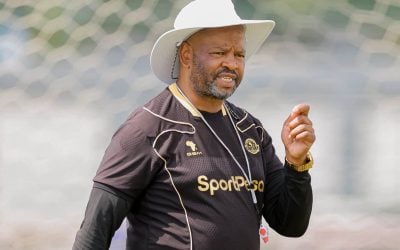
Ketjijere was representing Namibia when he caught the attention of AmaTuks, the University of Pretoria’s football club. He had no idea he was being watched. Sly Mosala, the coach who spotted him, had arrived with other players in mind.
“I was told about other players. But when I got there, I saw this guy,” Mosala tells FARPost.
What caught his eye was “the physicality, the technique, the awareness”. Only later did he discover that the midfielder was also pursuing a law degree.
For Ketjijere, the interest came as a surprise. “I was invited to Pretoria for a two-week trial. They liked what they saw, and we eventually agreed,” recalls the former UNAM FC defensive midfielder.
The invitation could hardly have come at a more complicated time. Ketjijere was in his fifth and final year of an LLB at the University of Namibia, with only about six months to graduation. Moving to South Africa meant putting his studies on hold, at least temporarily. AmaTuks agreed to pay his tuition fees and to facilitate his continued education at the University of Pretoria, but the arrangement came with an unexpected complication.
Rather than simply completing his outstanding subjects, he had to repeat some courses because the institution required him to complete at least half of his subjects there. It was a frustrating detour for a man already so close to the finish line, yet abandoning his academic ambitions was never an option.
“I had promised myself I would finish my studies. Education was always part of my plan for life after football,” he says.
BETWEEN EXAMS AND COSAFA CUP DUTY
Once at AmaTuks, he found himself navigating two demanding worlds, neither of which was prepared to yield to the other.
Football training was non-negotiable, but so were his academic responsibilities. He missed some lectures, relying on classmates for notes, and much of his learning came from self-study.
There were also the logistical challenges of being a student-athlete, particularly when football commitments clashed with examinations. One particularly memorable episode came in 2015, during Namibia’s victorious COSAFA Cup campaign. Ketjijere had another battle to fight, this time in the examination room.
“Even when we won the COSAFA Cup in 2015, I had exams. I had to drive between our base in the Rustenburg and Sun City areas and Pretoria to sit my exams, then return to camp,” he says.
It is an image that captures the extraordinary lengths to which he was prepared to go to keep both dreams alive: a footballer travelling between camp and university, trading the tactical demands of the game for the intellectual rigour of law studies, before returning to the business of football.
One of his former classmates, Sibusiso Tjotjo Kuhlase, remembers a guy who never took either pursuit lightly. Kuhlase became much more than a fellow student. Their friendship would eventually extend beyond the lecture halls of the University of Pretoria, with Kuhlase even travelling to Namibia to attend Ketjijere’s wedding.
Whenever football took Ketjijere away from Pretoria, Kuhlase was among those he could count on to keep him up to date on class developments.
“Whenever Ronald was away playing football, he knew he could count on me to brief him on what had happened in class and share the relevant notes,” Kuhlase tells FARPost.
KETJIJERE WAS NO PASSENGER IN CLASS
But while Ketjijere occasionally needed help catching up on missed lectures, he was no passenger in the classroom. In fact, Kuhlase remembers a student who had a particular gift for the very area of law he would eventually practise professionally.
“When we were drafting legal opinions at university, Ronald would also assist me, especially with administrative law. He really understood it. I was always good at labour law, but administrative law was his thing,” he adds.
He eventually graduated from the University of Pretoria in 2015.
The decision to pursue an education was informed by an understanding of football’s unpredictability. Ketjijere had watched enough football careers to know that the final whistle could come much earlier than expected.
“It was always about preparing for life after football. Over the years, I’ve seen players struggle after their playing days, with no income and no employment.
“You might have a big contract and believe you’ll never struggle after football. That can be true if you make the right investments and build businesses, but education remains valuable, even when you’ve made a lot of money.
“You never know what can happen in football. You could suffer an injury at 21 or 25 that ends your career. But if you’ve studied, you still have your knowledge and qualifications.”
PROMOTED TO PARTNER AT DENTONS

His foresight has paid dividends. Promoted to partner at Dentons in September 2025, he has established himself in the legal profession. “I’m now a full-time lawyer. I’m a litigation lawyer, so my work involves frequent court appearances and drafting. Much of my work is in administrative law, representing municipalities, as well as in procurement matters involving tenders.
“I’m also a partner at the firm, so there are management responsibilities and administrative matters to handle. I’ve now been practising law for about eight years, appearing in the High Court and Supreme Court in Namibia,” he says. Yet the courtroom has not ended his footballing adventures.
In a world where footballers often complain about packed schedules and demanding workloads, it seems almost incomprehensible that the veteran midfielder is still handling the heat in the engine room at African Stars, Namibia’s reigning league champions, while shouldering responsibilities at Dentons, where he specialises in commercial and civil litigation.
For those who have followed his career, however, this would hardly be a surprise.
“Ronald was my vice-captain at AmaTuks,” recalls former teammate Tebogo Monyai. “He was a very dedicated, hardworking player. He wasn’t necessarily the most technically gifted, but he made up for it with his work ethic, discipline and professionalism.
“He was a true professional who took responsibility and was highly organised in his personal life. He knew exactly what he wanted to achieve.”
At African Stars, where he remains captain, his value extends beyond the years he has spent on the pitch. Chairman Salomo Hei believes Ketjijere’s influence stems as much from his character as from his footballing abilities.
STILL LEADING AT AFRICAN STARS
“Ronald has shown that you can be an athlete and still thrive academically. He is a role model for aspiring footballers. At his age, he is still fit as a fiddle because he takes care of himself. He is a top professional,” Hei says.
“His leadership comes from how he carries himself, both on and off the field. He leads a clean life, trains the hardest, and leads from the front. He has demonstrated this consistently over the years.”
He admits the club initially thought the veteran had reached the end of the road, but his decision to continue playing ultimately proved worthwhile.
“He contributed immensely to the club’s CAF campaign thanks to his experience,” says Hei.
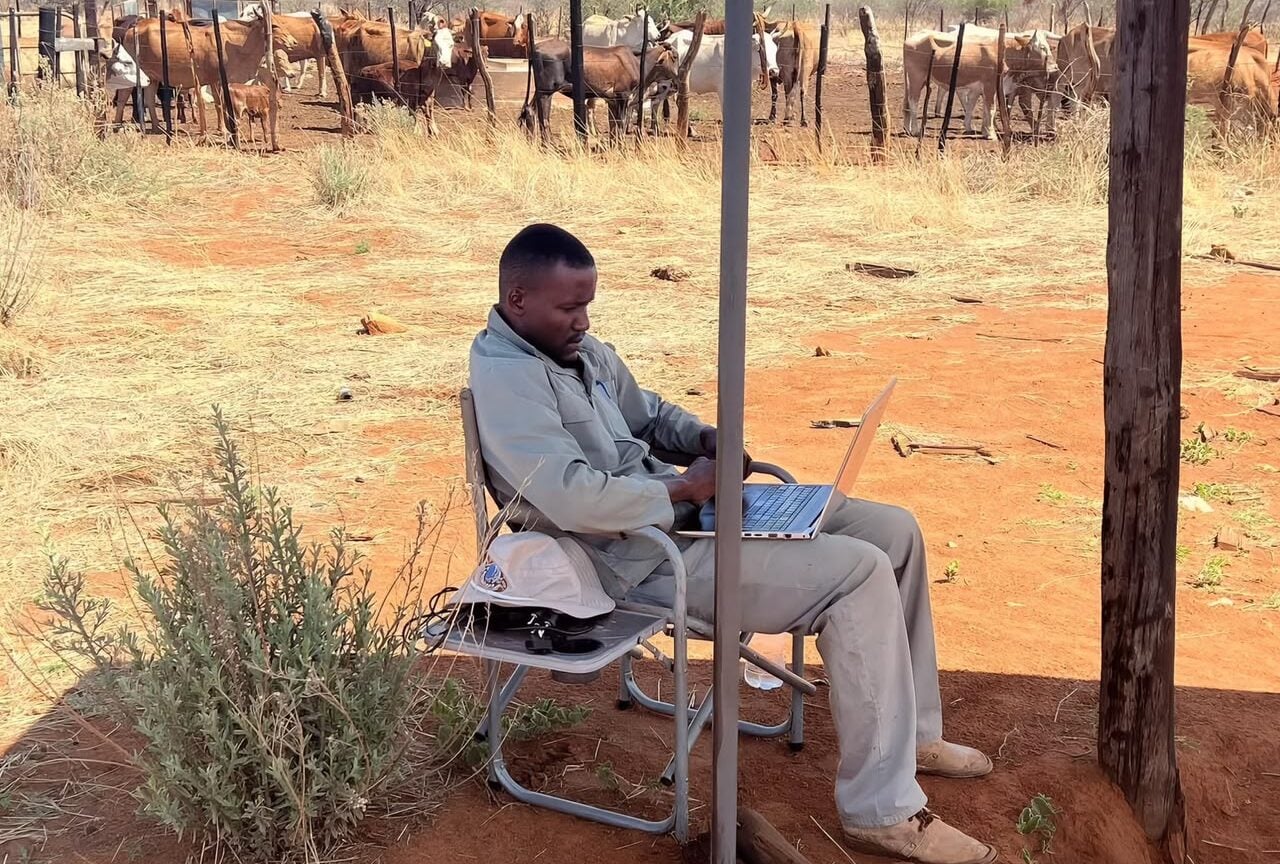
There is, however, another side to Ketjijere that does not involve legal briefs or football tactics. Away from the office and the training ground, he is also a cattle farmer.
It is a pursuit that adds another dimension to his already crowded schedule, taking him into the business of breeding and livestock management on a farm in Namibia.
“I’m a cattle farmer and buy stud bulls for my breeding programme, although I’m not yet a registered stud breeder. I run these projects on a farm in Namibia.”
The farming venture is another investment in a future he hopes will remain productive long after his football career has ended.
But while the lawyer and the farmer are steadily establishing themselves, the footballer is proving rather difficult to retire.
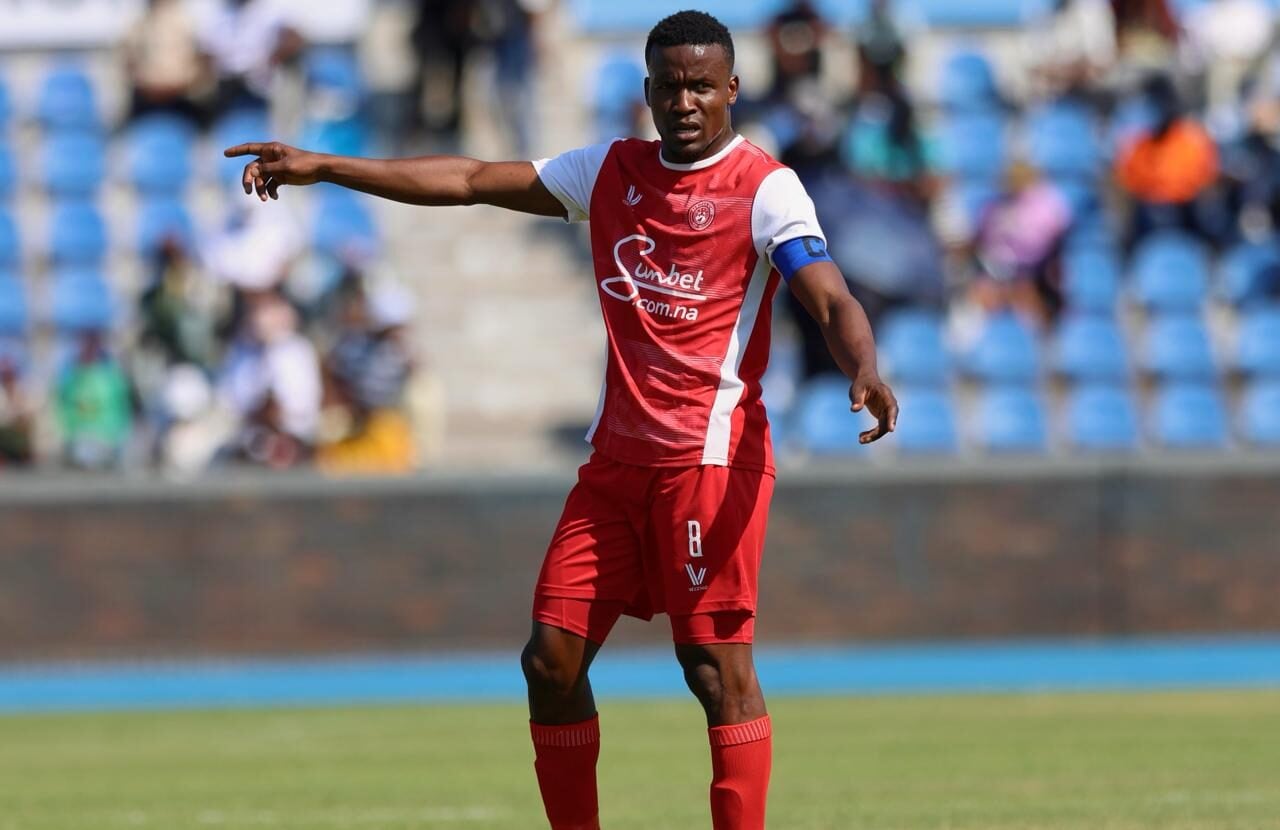
RETIREMENT HAS BECKONED MORE THAN ONCE FOR KETJIJERE
At just a year shy of 40, Ketjijere is still running alongside players young enough to be his children, and he takes particular pleasure in reminding them that age is not always a reliable indicator of fitness.
“I enjoy being fit, and I train on my own. Even when I’m away for work and can’t train with the team, my coaches know I’ll find a way to keep myself fit.
“I always ask the younger players, ‘How can you let an old man outrun you? I’m almost 40. How do you explain me being fitter than you?’”
For a man who has spent much of his adult life balancing the demands of football and the legal profession, knowing when to walk away from the game has proved a surprisingly difficult decision.
“For the past two or three seasons, I’ve been retiring and then not retiring. Of course, I want to stop at some point because I don’t want to stay too long, but the club keeps coming back and saying, ‘My guy, can you give us one more season?’”
Ketjijere knows his playing days are drawing to a close. He is equally conscious that a younger generation must eventually take his place. But with his body still holding up and his love for the game undiminished, the final whistle can wait a little longer.
After all, the lawyer in him may understand when to close a case, but the footballer is not quite ready to hang up his boots.
RELATED STORY: Peter Shalulile: The man who worships God with his feet