

As a young, strapping lad, Rulani Mokwena grew up in Orlando West, where love for Orlando Pirates reigned supreme. Living within earshot of the iconic Orlando Stadium, now known as Orlando Amstel Arena, he would have heard every cheer when a goal went in and every groan when a blunder led to a goal at the other end.
Beyond his geographical ties to the Sea Robbers, Pirates runs in Mokwena’s blood. His grandfather, Eric ‘Scara’ Sono, steered the Buccaneers’ ship in the 1960s, while his father, Julius ‘KK’ Sono, played for the club in the 1980s. His uncle is Jomo Cosmos owner Jomo Sono, whose history with the club is legendary.
Given these deep family ties and his lifelong love affair with Pirates, one might have expected Mokwena to settle at the club and sink his roots even deeper. Yet, after a run of five wins, four draws and five losses in 14 matches, that tenure left a scar.
One he still feels when reflecting on a young but already accomplished coaching career. However, Mokwena believes the pain and tears that accompanied the end of that stint were necessary. Leaving the comfort of a club he loved became an important step in his development.
“I had to experience that for me to be able to say: ‘Hey, okay, it looks good on the pitch. People love it, you’re scoring goals, but you’re not winning enough games. Why are you not winning enough games?’” Mokwena says.
“I had to have this experience because, had I been successful, I would not have had the opportunity to do that.”
ORLANDO PIRATES CHAPTER WAS NECESSARY
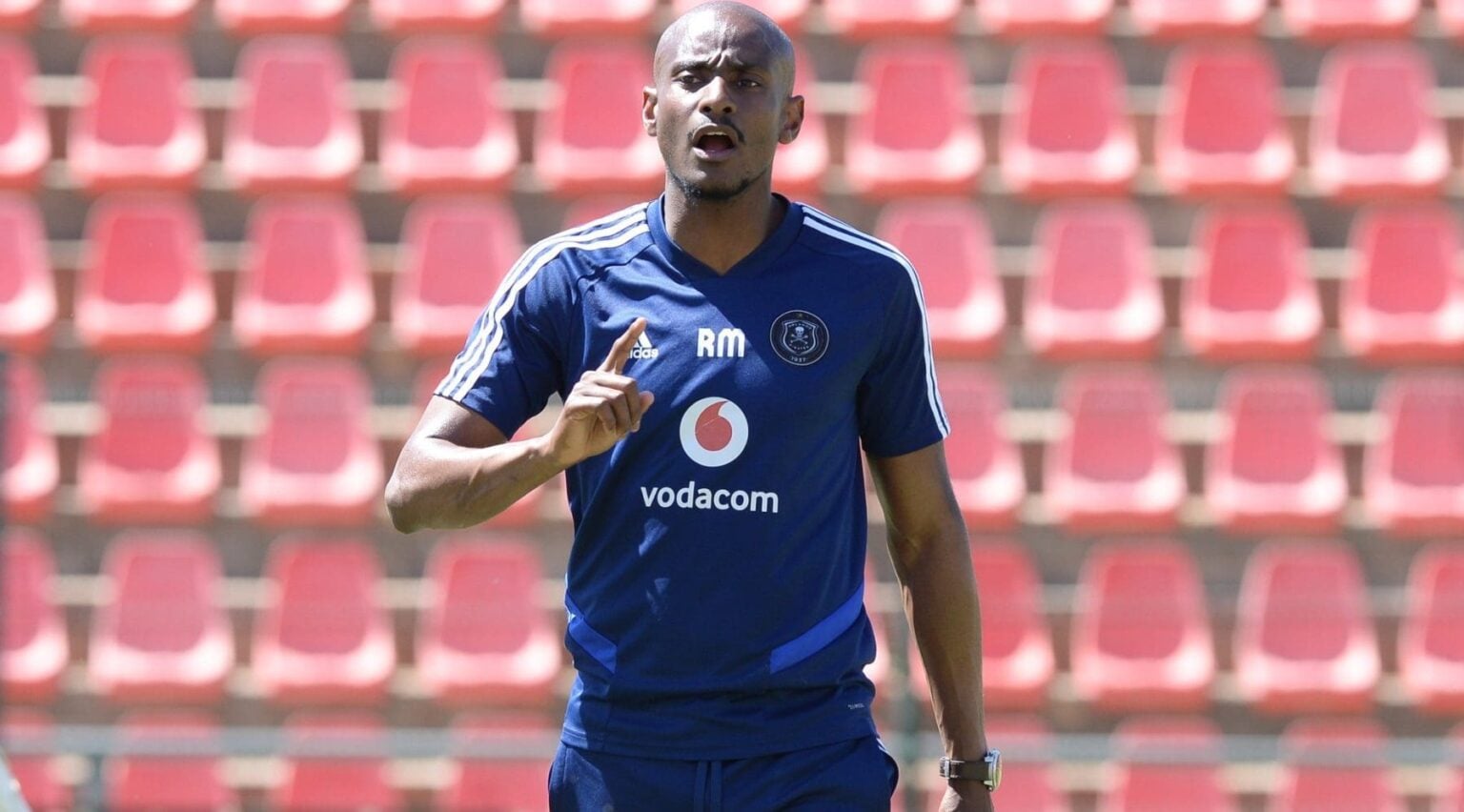
For Mokwena, the disappointment at the Buccaneers was especially painful given his emotional investment in the role. He was not merely a gaffer in the dugout; he was a lifelong supporter who had somehow found himself entrusted with the fortunes of the club he loved.
“It didn’t feel like I was an assistant coach. It didn’t feel like I was a coach, but I was more of a servant because everybody knows the history that we have with the club and my heart, how it feels about the club.
“When you work for a club that you love so much, you invest more than what you normally would as just a normal worker,” he recalls.
He is clear about where the responsibility for that chapter lies and equally clear about his gratitude. “I will always be grateful to Dr Irvin Khoza and the leadership at Orlando Pirates. They trusted a young coach with the club he had grown up loving, and that is an opportunity many never get. If it did not go as we all hoped, that is on me. What I learnt in that building, I carry with me every day,” he tells FARPost.
Despite the lingering pain, Mokwena now sees his turbulent spell with the Soweto giants as a necessary chapter in his evolution. It forced him to interrogate his methods, sharpen his ideas and confront the uncomfortable distinction between playing attractive football and winning consistently.
“My time at Pirates helped me a lot. I can tell you 100%… it helped me become the coach I am today. Even during that short stint as interim coach, I was more convinced than ever that the ideas were the right ideas, but some details had to be a little bit scrutinised.”
He began seeking perspectives beyond his immediate working environment, sharing match footage and training sessions with analysts who worked at the highest levels of international football.
“I could send the games and the training sessions to people who do analysis for a living. These people who work at the highest level in international football for European clubs were able to tell me: ‘Okay, keep this, take that, move this, improve this,’” he says.
THE PRESSURE COOKER ENVIRONMENT AT SUNDOWNS
That willingness to invite scrutiny and accept correction would become a defining feature of Mokwena’s approach to coaching. Failure, in his eyes, was not simply a verdict on his ability. It was an opportunity to identify what needed to change. If Pirates taught him the sting of falling short, the pressure-cooker environments that followed would teach him how to live with the heat.
“Fortunately, I’ve been marinated in pressure,” he says. “I was fortunate enough to work in a pressure cooker environment at Orlando Pirates. I was in a pressure cooker environment at Mamelodi Sundowns where you had to win every single game.”
The word marinated is telling. Mokwena, whose sides won seven major trophies with him at the helm, does not describe pressure as something he merely endured or survived, but as something that has seeped into his coaching instincts, shaping his responses to scrutiny, expectations, and the relentless demand for results.
At Masandawana, where the expectation was to win every match, the margin for error was narrow, yet it was also an environment where he could develop the tactical principles that would underpin his coaching philosophy.
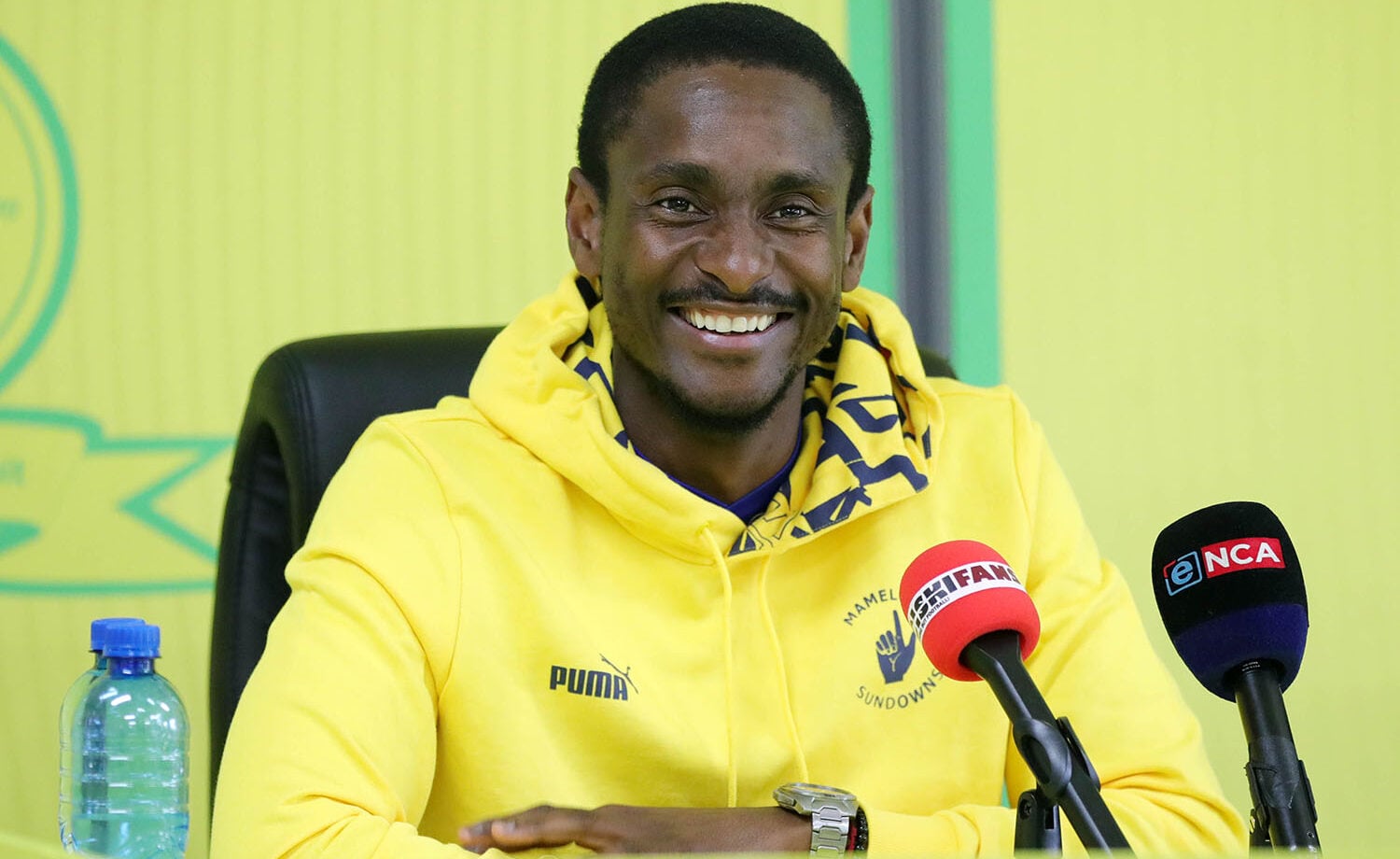
“My time at Sundowns, especially in the youth and as an assistant coach, helped me formulate my game model,” says Mokwena, who won 60 of his 93 matches as sole Sundowns head coach.
Yet he is quick to deflect credit for the silverware that followed. For him, Sundowns was never merely a workplace.
“I spent 12 years at Mamelodi Sundowns, and I fell in love with the club. It became a club, a family that I would do anything to see succeed. I must thank President Dr Patrice Motsepe and the chairman, Tlhopie Motsepe, for that great opportunity. Whatever success we had at the club was because of them and the chairman. They believed, they built the environment, and I was fortunate to be part of it.”
A major influence on Mokwena was Pitso Mosimane, under whom he spent a few years across two chapters of his career. The experience gave him a prolonged apprenticeship under one of South Africa’s most prominent coaches, offering lessons that went beyond the technical demands of the game.
“I cannot thank God enough for that opportunity and for the years that I was able to be close to him and to learn from him.”
THE BRIEF CHIPPA UNITED STINT
For a coach still working out his footballing identity, those years gave him the chance to observe, absorb and develop. However, Mokwena’s journey also required him to step outside established structures, test his skills in unfamiliar settings, and determine which of his ideas would work there.
The COVID-19 pandemic, despite the devastation it brought to families and football worldwide, provided an unexpected window for that work.
“I know it was a difficult time for the entire world and for many families, but COVID, for me personally, was so important because behind closed doors I could work on my game model, my training methodology,” he says.
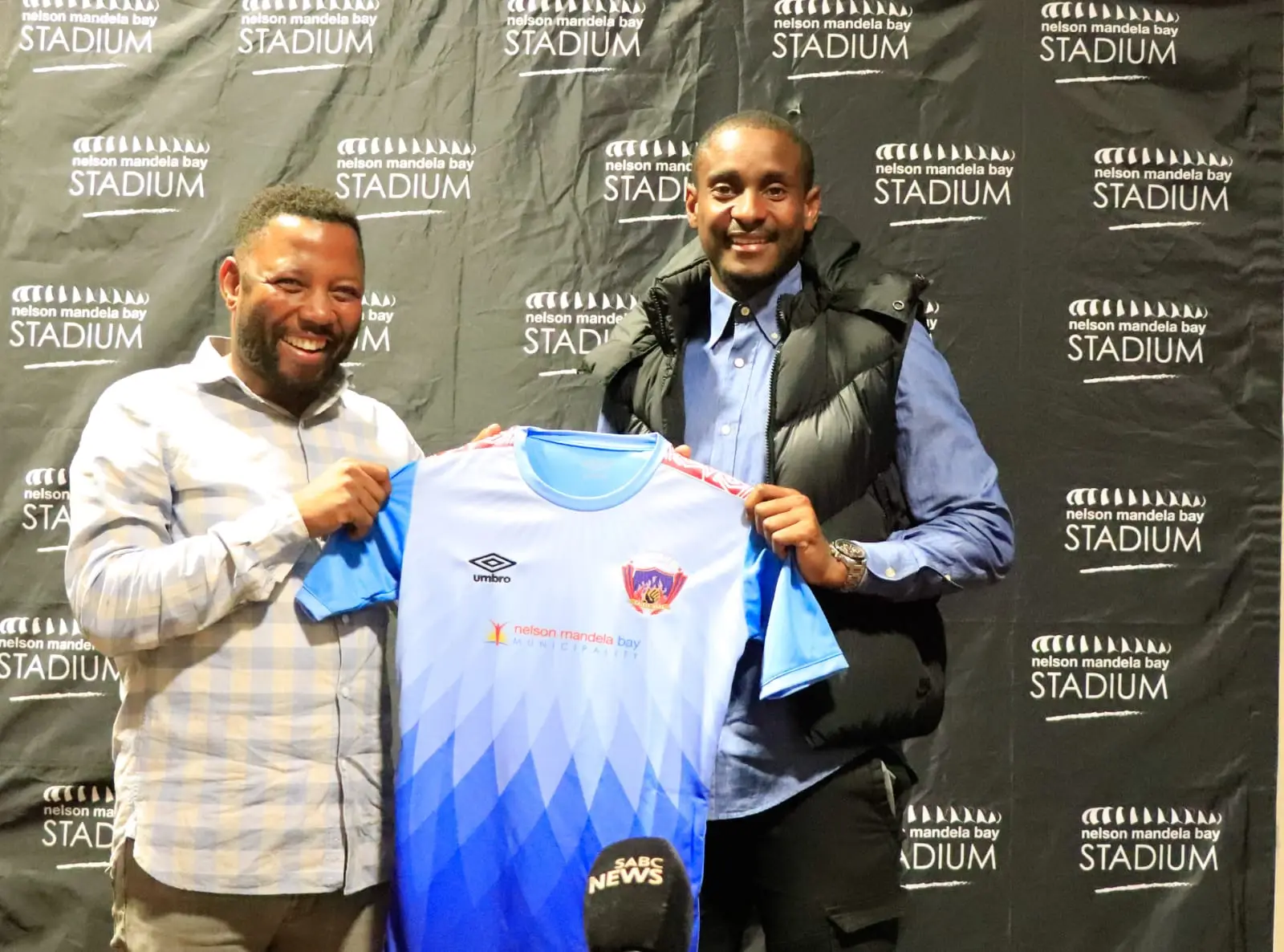
His time at Betway Premiership side Chippa United gave him a chance to turn that thinking into practice. While his official stint there amounted to just one match, the training sessions and friendly games provided room to experiment, evaluate and refine.
“For me at Chippa, it was one official match, but I had many friendly matches. I had many training sessions, and I had behind closed doors things that I could do, experiment and try.”
“I needed an outside resource to tell me: ‘This you have to work on, this you have to sharpen, and this you have to get better.’
That appetite for honest assessment would eventually take him beyond South Africa after his time at the helm of the Brazilians. His move to Morocco, which came after a Sundowns stint laden with a combined 14 trophies, was part of that deliberate search for new experiences rather than simply another step up the coaching ladder.
MOKWENA’S NORTH AFRICAN SAFARI
“I said when I left South Africa, and I went to Morocco, that I’d love to have a sojourn. I’d love to have a safari in the North African space to learn from a different football culture,” he says.
According to Mokwena, the willingness to move between clubs and footballing cultures has provided something that cannot easily be replicated in a classroom. Every team presents a different puzzle, requiring a coach to assess the players at his disposal and determine how best to translate his philosophy into results.
The 39-year-old mentor believes his age has given him the freedom to embrace that process without feeling compelled to settle too quickly on a single footballing identity.
“Maybe I am fortunate in that sense, from an age perspective, where I do feel that, from a coaching football age perspective, I have a little bit more years for these experiments,” he adds.
“I’m grateful to have the years to accept going from club to club, challenging my ideas, crushing some of them and throwing them away, and formulating different ideas so that we can win games.”
He adds: “This level of experience, you cannot buy in a coaching course.”
MOKWENA: ‘THE JOB IS NOT TO FORCE THE PLAYER INTO THE IDEA’
The value of this exposure has also been reflected in the different players he has worked with. Moving between clubs has brought him into contact with some of Africa’s finest footballers, each possessing distinct strengths and requiring different approaches.

The right-back position is a clear example. Khuliso Mudau at Sundowns, Reda Halaïmia at MC Alger and Mohamed Chibi at Pyramids play the same position, but they are three very different footballers.
“Three right backs, three completely different profiles, and you cannot coach them the same way,” Mokwena explains. “Khuliso is a defender first: very strong in duels, so he gives you the security to keep your winger high, and in build-up he can tuck in and become a third centre-back. Chibi is a natural width player. He loves to overlap, and his delivery is excellent, so you build the structure around giving him the touchline and bringing the winger inside. Reda was a combination of the two, but he was most comfortable in the central corridor. He could come inside into midfield or arrive in the box almost like a striker, and that gave us an extra player between the lines.
“The principles of the game model stay the same: occupy the right spaces, create superiority, protect against the counter. But the player decides how you apply them. The job is not to force the player into the idea. The job is to find the version of the idea that fits the player.”
LESSONS FROM ALGERIA & WYDAD
His time in Algeria, where his 19 league games in charge of MC Alger helped lay the foundation for their 2025/26 Ligue 1 title, provided another important lesson, challenging his understanding of a concept often taken for granted in football: technique.
“That’s where I understood the difference between ball control and technique. A lot of people talk about technique as ball control,” he explains. “Technique, for me, is being able to do the right thing at the right time, the right application at the right time, consistently, every single time.”
Although he did not win the league at Wydad Athletic Club, he believes the circumstances surrounding his tenure deserve closer examination, particularly given the scale of the rebuilding job he faced. The club brought in 29 new players, and he guided the Casablanca giants to a third-place finish. The perspective on that chapter has gradually shifted as people have gained a clearer understanding of the challenges involved.
“With time, I think people understand the size of the work that everyone at the club did – the players, the staff, the leadership,” he says.
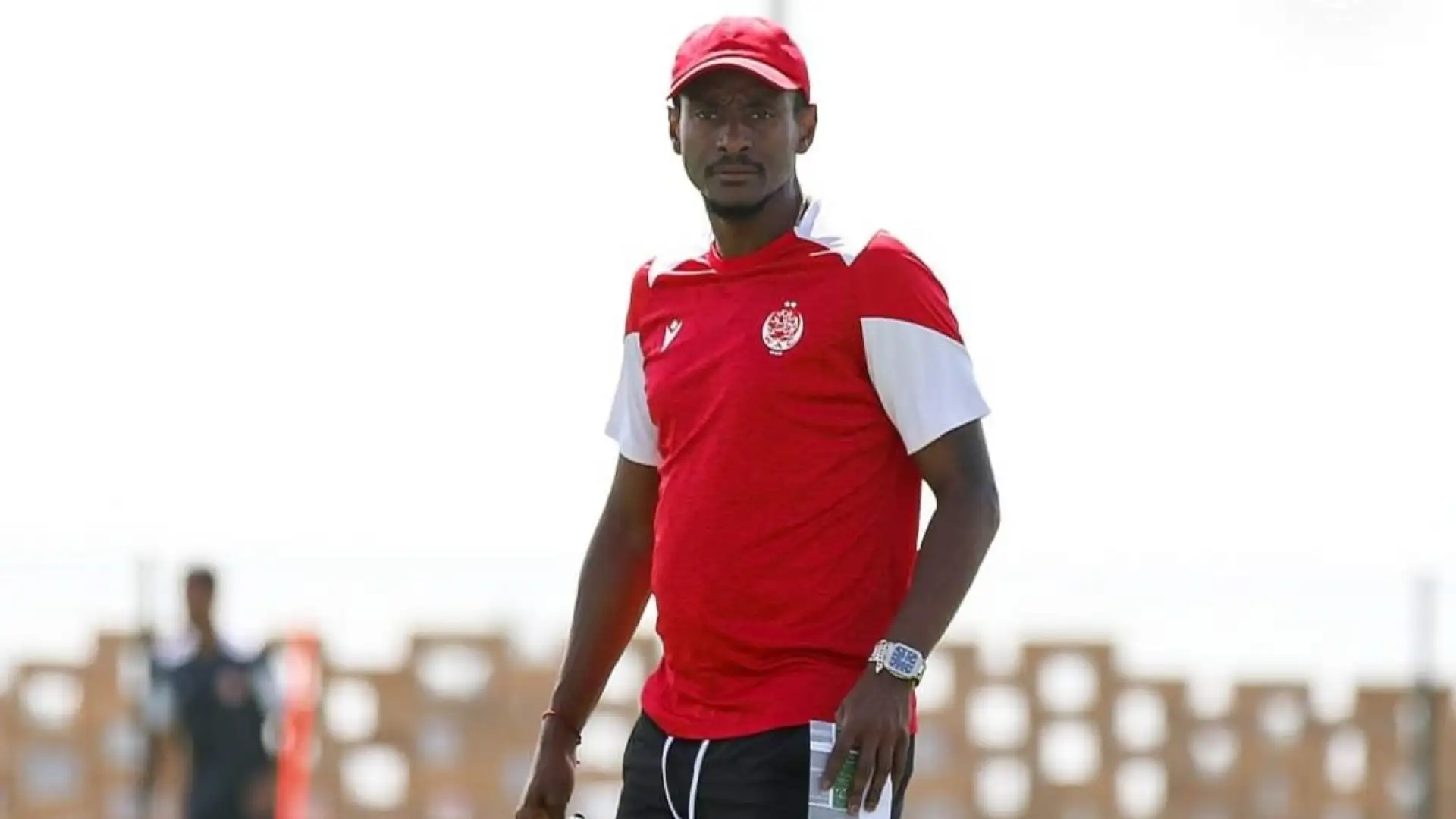
For Mokwena, the experience reinforces a recurring theme in his career: results matter, but understanding the circumstances behind them matters just as much. Finishing third might be judged differently depending on the expectations, resources and condition of the team at the start of a campaign.
It is not an argument against accountability. Rather, it reflects his belief that coaching requires an appreciation of the process behind the final scoreline.
That philosophy also helps explain his attraction to Egyptian Premier League side Pyramids FC. The club’s persistence in pursuing him gave him the impression that it understood his methods and could offer the demanding environment in which he wanted to keep developing.
PYRAMIDS “WERE SO PERSISTENT”
“Pyramids were so persistent. They were very strong. They knew a lot about me because they had followed me for a very long time,” he says. “You get the feeling that this is the type of environment that you want to be part of. You want to be stimulated, to grow. As a person, you want to challenge yourself in the space with some of the best teams.”
Yet Mokwena’s evolution has not been exclusively about tactical systems, training methods or the accumulation of experience across different leagues. It has also required personal growth, particularly in learning how to receive advice and recognise the value of lessons that might not have made sense to him at the time.
“Sometimes in the moment you might not recognise the wisdom. It’s not about the lack of wisdom from the other side or the lack of trying to help you from the other side. It’s actually maybe, in a sense, my own immaturity at that level or my own lack of readiness to receive this,” he reflects.
It is a candid admission from a coach whose career has often placed him under intense scrutiny. Rather than presenting himself as someone who has always had the answers, Mokwena acknowledges that maturity sometimes means returning to experiences with a different perspective and recognising what could have been learned from them. His curiosity remains central to that process.
“I’m very curious. I challenge my ideas, my football discoveries, what I think can work based on what I’ve seen, the teams that I follow. Sometimes they don’t work. Sometimes they work at this club and maybe not at this other club,” he says.
THE INFLUENCE OF WENDELL ROBINSON
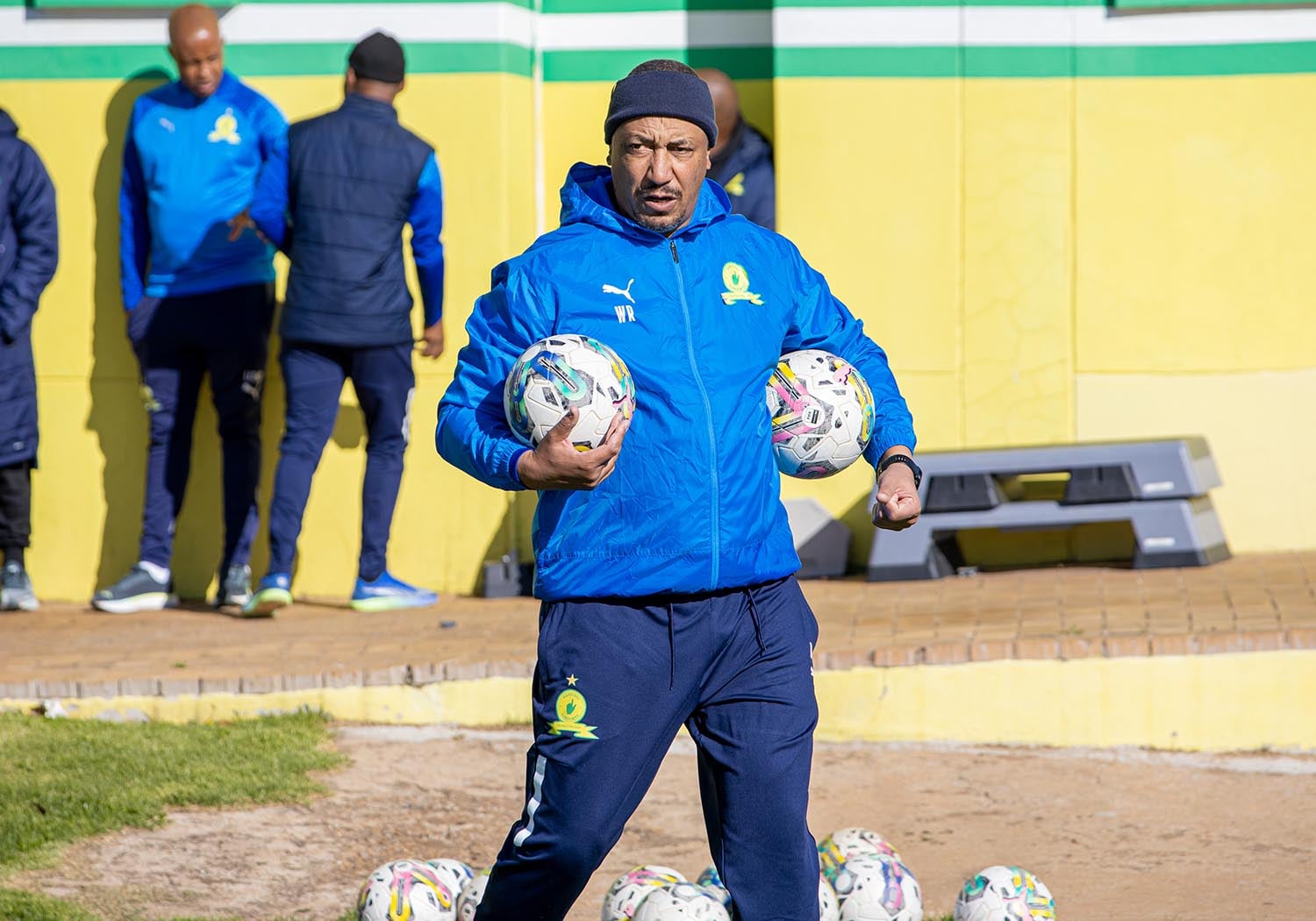
That willingness to question himself is strengthened by the people around him, particularly coach Wendell Robinson, whom Mokwena credits for his honesty.
“Coach Wendell Robinson is an important part of this because he’s one of the most honest people I’ve ever met. He’s very critical of my ideas and my thoughts, and this helps,” reveals the four-time league title winner.
There is also a personal foundation beneath the tactical curiosity and professional ambition. Mokwena credits his upbringing, particularly the influence of his late grandmother, his mother, and his wider family, for shaping the person he has become.
“I’m also grateful that I’ve had a very good upbringing. I pride myself on how my grandmother, my late grandmother and my mother and my entire family, in fact, raised me,” he adds.
That grounding has helped him accept that, for all his knowledge and experience, he remains fallible.
“I accept also the criticism because I’m fallible. I’m very much human, and I make a lot of mistakes, but they help me to grow.”
Despite his growth and success, Mokwena says his immediate ambition is to step away from the touchline for a while, taking a sabbatical to reflect and broaden his understanding of the game.
“My next immediate target is to take a sabbatical. I want to find some time to sit a little bit and to refresh, to study the game, to travel a little bit and see what’s happening in the world. It helps you as a coach to challenge your ideas, to stimulate and to work, to learn, to visit different people and develop yourself,” says the three-time SA Premiership Coach of the Season.
MOKWENA: ‘YOU HAVE TO FAIL, YOU HAVE TO FALL’
For someone who has spent much of his career in environments where the next match is never far away, and the demand for victory is constant, the prospect of stepping back offers a different kind of opportunity. It is a chance to study the game without the immediate pressure of preparing a team for the weekend, to observe other coaches and to return to the drawing board with fresh eyes.
It is also an acknowledgement that growth does not always happen in the heat of competition. Sometimes, progress requires stepping away long enough to understand what the experience has taught you.
Looking back, the COSAFA Men’s Coach of the Year does not attempt to disguise the disappointments that have marked his journey. Instead, he places them alongside the successes, treating both as essential parts of an education that continues to shape him.“You have to make mistakes. You have to fail. You have to fall. It’s part of the growth and part of the journey. It’s one of the reasons why I’m here,” he says.
Above all, he remains a coach who simply loves the game and the people in it. “I love football, I love coaching, and I love serving people. Whatever I achieve belongs to the players, the staff and the people who gave me the opportunity. The mistakes are mine, and I learn from them.”
RELATED STORY: Rulani Mokwena reveals how surprise Ramaphosa meeting unfolded in Cairo